CAS 613-77-4
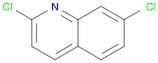
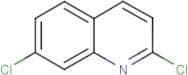
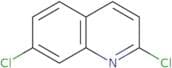
:2,7-Dichloroquinoline
Description:
2,7-Dichloroquinoline is a heterocyclic aromatic compound characterized by a quinoline structure, which consists of a fused benzene and pyridine ring. This compound features two chlorine atoms substituted at the 2 and 7 positions of the quinoline ring, influencing its chemical properties and reactivity. It is typically a pale yellow to brown solid at room temperature and is sparingly soluble in water but more soluble in organic solvents such as ethanol and acetone. The presence of chlorine atoms enhances its electrophilic character, making it a potential candidate for various chemical reactions, including nucleophilic substitutions. 2,7-Dichloroquinoline is of interest in medicinal chemistry and materials science due to its biological activity and potential applications in the synthesis of pharmaceuticals and agrochemicals. Additionally, it may exhibit antimicrobial and antitumor properties, although specific biological activities can vary based on structural modifications and the presence of other functional groups. Proper handling and safety precautions are essential, as with many chlorinated compounds, due to potential toxicity and environmental concerns.
Formula:C9H5Cl2N
InChI:InChI=1S/C9H5Cl2N/c10-7-3-1-6-2-4-9(11)12-8(6)5-7/h1-5H
InChI key:InChIKey=VOGBOMUONXLUTI-UHFFFAOYSA-N
SMILES:ClC1=CC2=C(C=CC(Cl)=N2)C=C1
Synonyms:- 2,7-Dichlorolepidine
- Quinoline, 2,7-Dichloro-
- 2,7-Dichloroquinoline
Sort by
Purity (%)
0
100
|
0
|
50
|
90
|
95
|
100
Found 4 products.
2,7-Dichloroquinoline
CAS:2,7-Dichloroquinoline is a quinoline derivative that has been synthesized to be a potential drug. The molecule is structurally similar to the natural bioactive molecule called adenosine, which is involved in many cellular processes. The 2,7-dichloroquinoline has been shown to have anti-inflammatory properties and may also have anticancer activity. It was identified as an inhibitor of protein kinase C and as a potent inhibitor of angiogenesis. This drug has also been shown to inhibit the growth of bacteria and fungi, which may be due to its ability to form covalent bonds with nucleophiles such as anions or azides.
Formula:C9H5Cl2NPurity:Min. 95%Molecular weight:198.05 g/mol