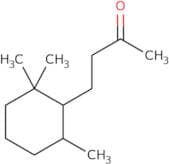
CAS 6138-85-8
:Tetrahydroionone
Description:
Tetrahydroionone, with the CAS number 6138-85-8, is a cyclic ketone that is structurally related to ionone, a compound known for its floral scent. It is characterized by a six-membered ring structure that includes a carbonyl group, contributing to its reactivity and potential applications in organic synthesis and fragrance formulation. Tetrahydroionone is typically a colorless to pale yellow liquid with a pleasant odor, making it valuable in the perfume industry. Its solubility in organic solvents and limited solubility in water are notable physical properties. The compound is often used as a flavoring agent and in the synthesis of other organic compounds. Additionally, it may exhibit some degree of biological activity, although specific toxicological data should be consulted for safety assessments. As with many organic compounds, proper handling and storage are essential to ensure safety and stability.
Formula:C13H24O
InChI:InChI=1/C13H24O/c1-10-6-5-9-13(3,4)12(10)8-7-11(2)14/h10,12H,5-9H2,1-4H3
InChI key:InChIKey=PQCDGQHNORPNBR-UHFFFAOYSA-N
SMILES:C(CC(C)=O)C1C(C)(C)CCCC1C
Synonyms:- 2-Butanone, 4-(2,2,6-trimethylcyclohexyl)-
- Tetrahydroionone
- 4-(2,2,6-trimethylcyclohexyl)butan-2-one
- Ionone, tetrahydro-
- 4-(2,6,6-Trimethylcyclohexyl)butan-2-one
- 4-(2,2,6-Trimethylcyclohexyl)-2-butanone
- AI3-34639
- 2-Butanone, 4-(2,2,6-trimethylcyclohexyl)-
- Tetrahydro-β-ionone
- 4-(2,2,6-trimethylcyclohexyl)-2-butanon
- Tetrahydro-retro-γ-ionone
- Tetrahydro-retro-ionone
- See more synonyms
Sort by
Purity (%)
0
100
|
0
|
50
|
90
|
95
|
100
Found 1 products.
4-(2,2,6-Trimethylcyclohexyl)butan-2-one
CAS:4-(2,2,6-Trimethylcyclohexyl)butan-2-one is a cyclic ketone that is an inhibitor of the nuclear hormone receptors PPARα and PPARγ. This chemical has been shown to promote the synthesis of fatty acids in melanocytes and to have an inhibitory effect on the synthesis of cholesterol. It also inhibits the growth of cancer cells in culture, such as those derived from breast cancer. The secondary metabolite has been found in plants such as Prenanthes lanceolata and cyanobacteria such as Lyngbya sp., which are used for the production of this compound. 4-(2,2,6-Trimethylcyclohexyl)butan-2-one is synthesized by oxidation of 3-(2,2,6-trimethylcyclohexyl)-1,3-dioxane with potassium permanganate or hydrogen peroxide in methanol solvent at low
Formula:C13H24OPurity:Min. 95%Molecular weight:196.33 g/mol