CAS 614-29-9
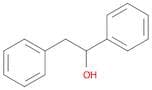
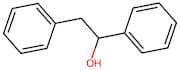
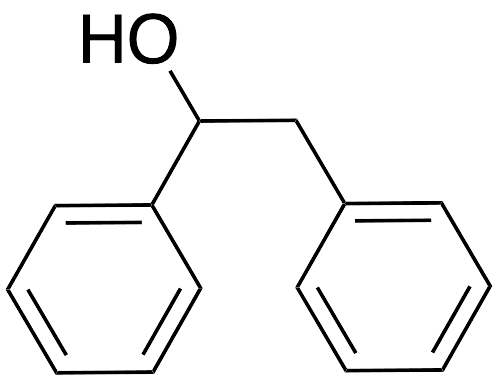
:1,2-diphenylethanol
Description:
1,2-Diphenylethanol, with the CAS number 614-29-9, is an organic compound characterized by its structure, which features two phenyl groups attached to a central ethanol moiety. This compound typically appears as a colorless to pale yellow solid and is known for its aromatic properties due to the presence of the phenyl rings. It has a relatively high melting point and is soluble in organic solvents such as ethanol and ether, but has limited solubility in water. 1,2-Diphenylethanol exhibits chiral properties, leading to the existence of two enantiomers, which can have different biological activities. It is often used in organic synthesis and as a building block in the preparation of various pharmaceuticals and fine chemicals. Additionally, it can serve as a ligand in coordination chemistry and has applications in the study of stereochemistry. Safety data indicates that, while it may pose some health risks upon exposure, it is generally handled with standard laboratory precautions.
Formula:C14H14O
InChI:InChI=1S/C14H14O/c15-14(13-9-5-2-6-10-13)11-12-7-3-1-4-8-12/h1-10,14-15H,11H2
InChI key:InChIKey=GBGXVCNOKWAMIP-UHFFFAOYSA-N
SMILES:C(CC1=CC=CC=C1)(O)C2=CC=CC=C2
Synonyms:- 1,2-Diphenyl-1-hydroxyethane
- 1,2-Diphenylethan-1-ol
- Benzeneethanol, alpha-phenyl-
- Benzeneethanol, α-phenyl-
- Benzylphenylcarbinol
- Ethanol, 1,2-diphenyl-
- Ethanol, 1,2-diphenyl- (8CI)
- Nsc 227194
- Nsc 39
- alpha-Hydroxydibenzyl
- α-Hydroxydibenzyl
- α-Phenylbenzeneethanol
- 1,2-Diphenylethanol
- 1,2-Diphenylethanol
- α-Benzylbenzyl alcohol
- See more synonyms
Sort by
Purity (%)
0
100
|
0
|
50
|
90
|
95
|
100
Found 5 products.
1,2-Diphenylethan-1-ol
CAS:Styrene is an organic compound that has a wide range of applications, including in the manufacture of plastics and polystyrene. Styrene is used as a solvent for paints, coatings, sealants, and adhesives. This chemical is also used to make other chemicals. Styrene can be found in many products we use every day, such as baby bottles, food containers, and plastic utensils. Styrene is released into the air from car exhausts and cigarette smoke. It can also be found in drinking water at low levels. Even though styrene may not seem harmful to us on its own, it does have serious health effects when exposed to humans over time or in large quantities. Styrene can cause depression in women and infants if they are exposed to high levels of styrene over a long period of time. It can also cause death by interfering with the central nervous system. Styrenes are known to have anti-inflammatory activity in animals and pain control properties in humans.Formula:C14H14OPurity:Min. 95%Molecular weight:198.26 g/mol