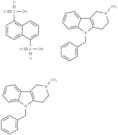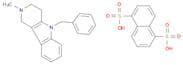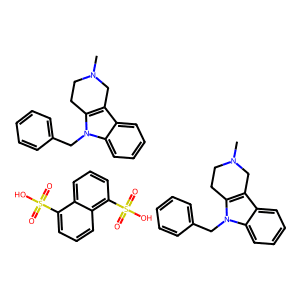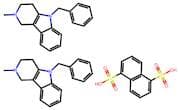
CAS 6153-33-9
:Diazoline
Description:
Diazoline, with the CAS number 6153-33-9, is a heterocyclic organic compound characterized by its five-membered ring structure containing two nitrogen atoms. It is classified as a diazole, which is a type of azole, and is known for its potential applications in medicinal chemistry and as a building block in organic synthesis. Diazoline exhibits properties typical of nitrogen-containing heterocycles, such as the ability to participate in various chemical reactions, including electrophilic substitutions and nucleophilic attacks. Its structure allows for the formation of derivatives that may enhance its biological activity or alter its physical properties. The compound is generally stable under standard conditions but may undergo reactions when exposed to strong acids or bases. Due to its unique structure, diazoline and its derivatives have garnered interest in research for their potential pharmacological effects, although specific applications and biological activities may vary. As with many chemical substances, safety precautions should be observed when handling diazoline, as its toxicity and reactivity can depend on the specific context of use.
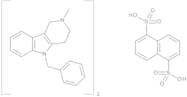
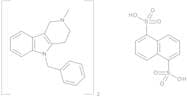
Formula:C48H48N4O6S2
InChI:InChI=1/2C19H20N2.C10H8O6S2/c2*1-20-12-11-19-17(14-20)16-9-5-6-10-18(16)21(19)13-15-7-3-2-4-8-15;11-17(12,13)9-5-1-3-7-8(9)4-2-6-10(7)18(14,15)16/h2*2-10H,11-14H2,1H3;1-6H,(H,11,12,13)(H,14,15,16)
InChI key:InChIKey=UBHSARJULCDNFC-UHFFFAOYSA-N
SMILES:C(N1C2=C(C=3C1=CC=CC3)CN(C)CC2)C4=CC=CC=C4.S(=O)(=O)(O)C=1C2=C(C(S(=O)(=O)O)=CC=C2)C=CC1
Synonyms:- 1,5-Naphthalenedisulfonic acid, compd. with 2,3,4,5-tetrahydro-2-methyl-5-(phenylmethyl)-1H-pyrido[4,3-b]indole (1:2)
- 1,5-Naphthalenedisulfonic acid, compd. with 5-benzyl-2,3,4,5-tetrahydro-2-methyl-1H-pyrido[4,3-b]indole (1:2)
- 1H-Pyrido[4,3-b]indole, 2,3,4,5-tetrahydro-2-methyl-5-(phenylmethyl)-, 1,5-naphthalenedisulfonate (2:1)
- 1H-Pyrido[4,3-b]indole, 5-benzyl-2,3,4,5-tetrahydro-2-methyl-, 1,5-naphthalenedisulfonate (2:1)
- 2H-Pyrido[4,3-b]indole, 5-benzyl-1,3,4,5-tetrahydro-2-methyl-, 1,5-naphthalenedisulfonate (2:1)
- Diazolin
- Diazoline
- Fabahistin
- Incidal
- Mebhydrolin Napadisilate
- Mebhydrolin napadisylate
- Mebhydroline napadisylate
- Omeril
- naphthalene-1,5-disulfonic acid - 5-benzyl-2-methyl-2,3,4,5-tetrahydro-1H-pyrido[4,3-b]indole (1:2)
- MEBBYDROLIN NAPADISYLATE
- 1,5-naphthalenedisulfonicacid,compd.with2,3,4,5-tetrahydro-5-benzyl-2-methy
- Nabhydrolin 1,5-naphthalene disulfonate
- 3-methyl-9-benzyl-1,2,3,4-tetrahydrocarbolymnaphthalyn-1,5-disulphonate
- l-1h-pyrido(4,3-b)indol(1:2)
- Diazoline mebhydrolin napadisylate
- MEBHYDROLINE 1,5-NAPHTHALENEDISULFONATE
- 9-benzyl-n-methyl-1,2,3,4-tetrahydro-α-carboline
- 3-Methyl-9-benzyl-1,2,3,4-tetrahydrocarboline-1,5-naphthalene disuphonate BP2000 EP3, Diazolinum,Mebhydrolin
- Diazolinum
- 9-BENZYL-N-METHYL-1,2,3,4-TETRAHYDRO-ALPHA-CARBOLINE 1,5-NAPHTHALENEDISULFONATE SALT
- 9-Benzyl-N-Methyl-1,2,3,4-Tetrahydro-A-Carboline
- 3-Methyl-9-benzyl-1,2,3,4-tetrahydrocarboline-1,5-naphthalene disuphonate
- MEBHYDROLINE 1,5-NAPHTHALENEDISULFONATE SALT
- 3-Methyl-9-benzyl-1,2,3,4-tetrahydro-alpha-carboline 1,5-naphthalene disulphonate (Diazolinum)
- Diazolinum: Mebhydrolin
- US Navy Quirin napadisylate
- 3-Methyl-9-benzyl-1,2,3,4-tetrahydrocarboline-1,5-naphthalene disuphonate BP2000 EP3
- See more synonyms
Sort by
Purity (%)
0
100
|
0
|
50
|
90
|
95
|
100
Found 8 products.
Mebhydrolin napadisylate
CAS:Mebhydrolin napadisylate (Incidal) is an antihistamine used to relieve allergic symptoms caused by histamine release, including nasal allergies and allergicFormula:C19H20N2C10H8O6S2Purity:99.35% - 99.96%Color and Shape:White Or Almost White CrystallineMolecular weight:420.52Mebhydrolin napadisylate
CAS:Formula:C48H48N4O6S2Purity:98%Color and Shape:SolidMolecular weight:841.0479Mebhydrolin napadisylate
CAS:Mebhydrolin napadisylateFormula:C19H20N2C10H8O6S2Purity:≥98%Molecular weight:420.52Mebhydrolin Napadisylate
CAS:Mebhydrolin NapadisylateFormula:C48H48N4O6S2Purity:98%Molecular weight:841.05Mebhydrolin Napadisilate
CAS:Controlled ProductFormula:C19H20N2·C10H8O6S2Color and Shape:NeatMolecular weight:841.05Mebhydrolin Napadisylate
CAS:Applications Mebhydrolin (INN) is an antihistamine. Mebhydrolin is used for symptomatic relief of allergic symptoms caused by histamine release, including nasal allergies and allergic dermatosis.
References Ermer, J., et al.: J. Pharm. Biomed. Anal., 24, 755 (2001), Huber, R., et al.: J. Neurosci. Res., 75, 441 (2004), Kim, J., et al.: Cell Metab. 3, 177 (2006), Bonnet, S., et al.: Cancer Cell, 11, 37 (2007),Formula:C19H20N2·C10H8O6S2Color and Shape:NeatMolecular weight:841.05