CAS 616-13-7
:1-Chloro-2-methylbutane
Description:
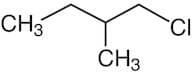
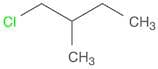
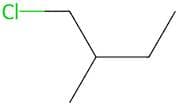
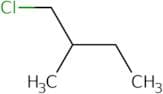
1-Chloro-2-methylbutane is an organic compound classified as an alkyl halide, specifically a chloroalkane. It features a four-carbon butane backbone with a chlorine atom and a methyl group attached to the second carbon. This structure gives it the molecular formula C5H11Cl. The compound is typically a colorless liquid with a characteristic odor and is known for its moderate volatility. It is soluble in organic solvents but has limited solubility in water due to its hydrophobic hydrocarbon chain. 1-Chloro-2-methylbutane is used in organic synthesis and as an intermediate in the production of various chemicals. It can undergo nucleophilic substitution reactions, making it a useful reagent in synthetic organic chemistry. Safety precautions are necessary when handling this compound, as it can be irritating to the skin and eyes and may pose health risks if inhaled or ingested. Proper storage in a cool, well-ventilated area away from incompatible substances is essential to ensure safety.
Formula:C5H11Cl
InChI:InChI=1S/C5H11Cl/c1-3-5(2)4-6/h5H,3-4H2,1-2H3
InChI key:InChIKey=IWAKWOFEHSYKSI-UHFFFAOYSA-N
SMILES:C(CC)(CCl)C
Synonyms:- 2-Methylbutyl chloride
- Butane, 1-chloro-2-methyl-
- Chloromethylbutane
- (±)-1-Chloro-2-methylbutane
- 1-Chloro-2-methylbutane
Sort by
Purity (%)
0
100
|
0
|
50
|
90
|
95
|
100
Found 4 products.
1-Chloro-2-methylbutane
CAS:Formula:C5H11ClPurity:>95.0%(GC)Color and Shape:Colorless to Light yellow to Light orange clear liquidMolecular weight:106.591-Chloro-2-methylbutane
CAS:1-Chloro-2-methylbutane is a reactive, chiral molecule that has been used as a reagent to introduce the methyl group into organic compounds. 1-Chloro-2-methylbutane reacts with iodides in an acid solution to form the methyliodide salt and hydrogen gas. The reaction occurs at temperatures between 50°C and 150°C, but not at higher temperatures. The yield of this reaction depends on the concentration of iodide ions present, with lower concentrations producing a higher yield of product. A variety of frequencies can be used to irradiate the compound with light energy, each producing different results. At low frequencies (less than 10 Hz), the compound absorbs energy and heats up to produce vibrational modes. At high frequencies (greater than 100 Hz), the compound breaks down into two molecules, one containing chlorine and one containing iodine. Irradiation at wavelengths between 250 nm and 400 nm causes bond cleavage in the molecule, yieldingFormula:C5H11ClPurity:Min. 95%Color and Shape:Clear LiquidMolecular weight:106.59 g/mol