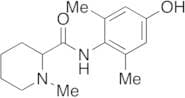
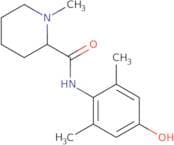
CAS 616-66-0
:N-(4-Hydroxy-2,6-dimethylphenyl)-1-methyl-2-piperidinecarboxamide
- 1-Methylpipecolo-4′-hydroxy-2′,6′-xylidide
- 1-Methyl-4′-hydroxy-2′,6′-pipecoloxylidide
- 2-Piperidinecarboxamide, N-(4-hydroxy-2,6-dimethylphenyl)-1-methyl-
- N-(4-Hydroxy-2,6-dimethylphenyl)-1-methyl-2-piperidinecarboxamide
- 2′,6′-Pipecoloxylidide, 4′-hydroxy-1-methyl-
- 4-Hydroxy Mepivacaine
- N-(4-hydroxy-2,6-dimethylphenyl)-1-methylpiperidine-2-carboxamide
- N-(4-Hydroxy-2,6-diMethylphenyl)-1-Methyl
- Mepivacaine 4-Hydroxy Impurity
4-Hydroxy Mepivacaine
CAS:Controlled ProductApplications A metabolite of Mepivacaine (M225060).
References Cribb, A., et al.: Drug Metabol. Dispos., 19, 900 ( 1991), Brander, C., et al.: J. Immunol., 155, 2670 (1995), Padovan, E., et al.: Eur. J. Immunol., 27, 1303 (1997),Formula:C15H22N2O2Color and Shape:NeatMolecular weight:262.354-Hydroxy mepivacaine
CAS:4-Hydroxy mepivacaine is a drug product that belongs to the group of local anesthetics. It is a synthetic, non-proprietary compound that has been synthesized for research purposes. 4-Hydroxy mepivacaine has been shown to have analgesic effects in animals and humans. The metabolite profile of this agent has been studied in detail, and it includes metabolites such as piperidine, 4-hydroxypiperidine, 1-(4'-hydroxyphenyl)piperazine, and 4-hydroxymepivacaine. Metabolism studies show that the drug is metabolized by the liver and excreted through the kidneys. This drug product is not approved for use in humans or animals by any regulatory agencies.
Formula:C15H22N2O2Purity:Min. 95%Color and Shape:PowderMolecular weight:262.35 g/mol