CAS 61636-28-0
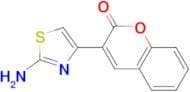
:3-(2-amino-1,3-thiazol-4-yl)-2H-chromen-2-one
Description:
3-(2-amino-1,3-thiazol-4-yl)-2H-chromen-2-one, with the CAS number 61636-28-0, is a chemical compound that features a chromenone core substituted with a thiazole ring. This compound typically exhibits characteristics such as being a heterocyclic organic molecule, which may possess biological activity due to the presence of both the thiazole and chromenone moieties. The thiazole ring contributes to its potential as a pharmacophore, making it of interest in medicinal chemistry for its possible antimicrobial, anti-inflammatory, or anticancer properties. The amino group on the thiazole enhances its reactivity and solubility in polar solvents. Additionally, the chromenone structure is known for its ability to absorb UV light, which may impart photochemical properties. Overall, this compound's unique structural features suggest a diverse range of applications in pharmaceuticals and materials science, warranting further investigation into its chemical behavior and potential uses.
Formula:C12H8N2O2S
InChI:InChI=1/C12H8N2O2S/c13-12-14-9(6-17-12)8-5-7-3-1-2-4-10(7)16-11(8)15/h1-6H,(H2,13,14)
SMILES:c1ccc2c(c1)cc(c1csc(=N)[nH]1)c(=O)o2
Synonyms:- 2H-1-benzopyran-2-one, 3-(2,3-dihydro-2-imino-4-thiazolyl)-
- 2H-1-Benzopyran-2-one, 3-(2-amino-4-thiazolyl)-
Sort by
Purity (%)
0
100
|
0
|
50
|
90
|
95
|
100
Found 2 products.
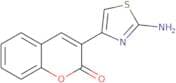
3-(2-Amino-thiazol-4-yl)-chromen-2-one
CAS:3-(2-Amino-thiazol-4-yl)-chromen-2-one is a synthetic compound that exhibits cytotoxic activity in vitro. It has been shown to have antibacterial, antiviral, and antifungal activities. 3-(2-Amino-thiazol-4-yl)-chromen-2-one inhibits the growth of bacteria by binding to DNA. The mechanism of action of this compound is similar to cisplatin, a widely used anticancer drug. 3-(2-Amino-thiazol-4-yl)-chromen-2-one binds to the minor groove of DNA, forming an interstrand crosslink between two adjacent base pairs that prevents DNA replication and transcription. This compound also has potential as a cancer therapeutic due to its ability to inhibit the growth of tumour cells without affecting noncancerous cells.Formula:C12H8N2O2SPurity:Min. 95%Molecular weight:244.27 g/mol