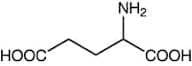
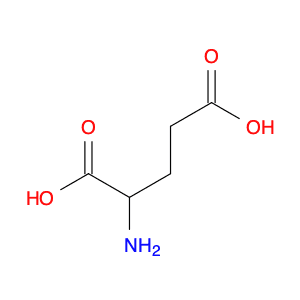
CAS 617-65-2
:Glutamic acid
- 2-Aminopentanedioic acid
- 4-Amino-1,5-pentanedioic acid
- <span class="text-smallcaps">D</smallcap><smallcap>L</span>-Glu
- <span class="text-smallcaps">D</smallcap><smallcap>L</span>-Glutamic acid
- Acide DL-glutamique, monohydrate
- DL-Glu
- DL-Glutaminsauremonohydrat
- DL-glutamic acid monohydrate
- Glutamic Acid
- Glutamic acid, <span class="text-smallcaps">D</smallcap><smallcap>L</span>-
- Glutamic acid, DL-
- Glutaminic acid
- Nsc 206301
- Nsc 9967
- acido DL-glutamico, monohidrato
- See more synonyms
DL-Glutamic acid, 95%
CAS:Its salt form (glutamate) is an important neurotransmitter that plays a key role in long-term potentiation and is important for learning and memory. Glutamic Acid is also a key molecule in cellular metabolism. DL-Glutamic acid is used ito study its mechanisms of crystal formation and self-assembly oFormula:C5H9NO4Purity:95%Color and Shape:Powder, WhiteMolecular weight:147.13DL-Glutamic Acid
CAS:Formula:C5H9NO4Purity:>92.0%(HPLC)Color and Shape:White powder to crystalMolecular weight:147.13DL-Glutamic acid
CAS:DL-Glutamic acid, conjugate acid of Glutamic acid, is a key metabolite with improved stability over L-Glutamic acid's polymorphs.
Formula:C5H9NO4Color and Shape:SolidMolecular weight:147.13DL-Glutamic Acid
CAS:Controlled ProductApplications Glutamic Acid is non-essential amino acid. Its salt form (glutamate) is an important neurotransmitter that plays a key role in long-term potentiation and is important for learning and memory. Glutamic Acid is also a key molecule in cellular metabolism.
References McEntee, W. et al.: Psychopharmacology, 111, 391 (1993); Manev, H. et al.: Mol. Pharmacol., 36, 106 (1989);Formula:C5H9NO4Color and Shape:NeatMolecular weight:147.13DL-Glutamic acid
CAS:Glutamic acid is a non-essential amino acid that has been shown to play an important role in the pathogenesis of many diseases. Glutamic acid has been shown to be involved in the production of glutamate, which is a neurotransmitter that can lead to neuronal death. Glutamic acid also plays an important role in the maintenance of mitochondrial membrane potential and energy metabolism. Glutamate is an inhibitory neurotransmitter, and it regulates the release of other neurotransmitters, such as dopamine and serotonin. This amino acid may also be involved in brain functions and neurotrophic factors.
Formula:C5H9NO4Purity:Min. 95%Color and Shape:White PowderMolecular weight:147.13 g/molDL-Glutamic acid
CAS:Formula:C5H9NO4Purity:97%Color and Shape:Solid, White powderMolecular weight:147.13