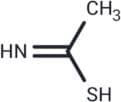
CAS 62-55-5
:Thioacetamide
Description:
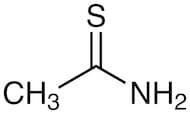
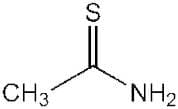
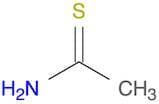
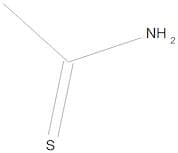
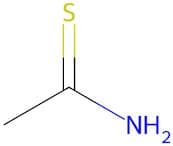
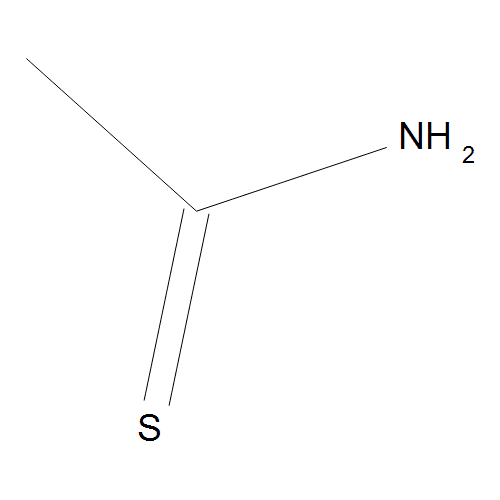
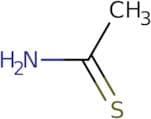
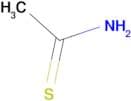
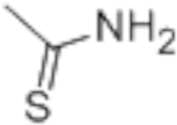
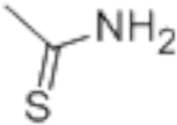
Thioacetamide is an organic compound with the chemical formula C2H5NS, characterized by the presence of a thioamide functional group. It appears as a white crystalline solid with a faint sulfur odor and is soluble in water, alcohol, and ether. Thioacetamide is known for its role in organic synthesis, particularly as a reagent in the preparation of thioamides and other sulfur-containing compounds. It is also utilized in various applications, including the production of pharmaceuticals and agrochemicals. The compound has a relatively low toxicity profile, but it can be hazardous upon ingestion or inhalation, necessitating appropriate safety precautions during handling. Thioacetamide can undergo hydrolysis to form acetic acid and hydrogen sulfide, and it is also known to participate in various chemical reactions, such as nucleophilic substitutions. Due to its reactivity, it is important to store thioacetamide in a cool, dry place, away from strong oxidizing agents.
Formula:C2H5NS
InChI:InChI=1S/C2H5NS/c1-2(3)4/h1H3,(H2,3,4)
InChI key:InChIKey=YUKQRDCYNOVPGJ-UHFFFAOYSA-N
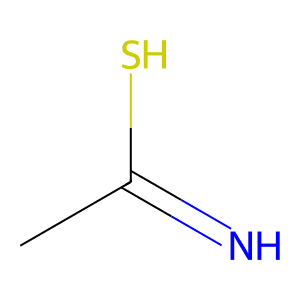
SMILES:C(C)(N)=S
Synonyms:- Acetamide, thio-
- Acetimidic acid, thio-
- Acetothioamide
- Nsc 2120
- TAA
- Thiacetamide
- Thioacetamid
- Thioacetamide
- Tioacetamida
- Ethanethioamide
Sort by
Purity (%)
0
100
|
0
|
50
|
90
|
95
|
100
Found 16 products.
Thioacetamide
CAS:Formula:C2H5NSPurity:>98.0%(GC)(T)Color and Shape:White to Light yellow to Light orange powder to crystalMolecular weight:75.13Thioacetamide, ACS, 99% min
CAS:Thioacetamide is used in qualitative inorganic analysis as an in-situ source for sulfide ions. It is used in analytical chemistry as a source of hydrogen sulfide. It is an additive in enantioselective reduction of beta-keto esters with immobilized bakers yeast. It is also used as a vulcanizing agentFormula:C2H5NSPurity:99%Molecular weight:75.13Thioacetamide, 98%
CAS:Thioacetamide is used in qualitative inorganic analysis as an in-situ source for sulfide ions. It is used in analytical chemistry as a source of hydrogen sulfide. It is an additive in enantioselective reduction of beta-keto esters with immobilized bakers yeast. It is also used as a vulcanizing agentFormula:C2H5NSPurity:98%Color and Shape:White to cream to pale yellow, Crystals or powder or crystalline powderMolecular weight:75.13Thioacetamide, 10mM (in DMSO)
CAS:Thioacetamide, 10mM (in DMSO)Purity:≥98%Molecular weight:75.13g/molThioacetamide
CAS:Formula:C2H5NSPurity:≥ 99.0%Color and Shape:White, off-white or faint yellow or beige crystalline powder or crystalsMolecular weight:75.13Thioacetamide
CAS:ThioacetamideFormula:C2H5NSPurity:99%Color and Shape: colorless/white to off-white/yellow solidMolecular weight:75.1328g/molThioacetamide
CAS:Controlled ProductApplications Thioacetamide is a carcinogen, a hepatotoxicant. Thioacetamide induces acute chronic liver injury through the activation of protein synthesis of RNA, DNA, and gamma-glutamyl transpeptitase. Thioacetamide has been used in the synthesis of [email protected] nano-array core-shell structure.
References Akhtar, T., Sheikh, N.: Toxin Reviews, 32, 43 (2013); Yuan, A., et. al.: Adv. Mater. Res., 652, 683 (2013)Formula:C2H5NSColor and Shape:NeatMolecular weight:75.13Thioacetamide
CAS:Controlled ProductThioacetamide is a chemical compound that has been used as a model system to study apoptosis. It is also known to cause injury and biochemical changes in cells. Thioacetamide is metabolized by cytochrome P450 enzymes and conjugated with glucuronic acid, which prevents it from binding to DNA or protein. The oxidation of thioacetamide by cytochrome P450 enzymes leads to the formation of reactive oxygen species that may cause DNA damage. Apoptosis induced by thioacetamide has been shown to be mediated through the mitochondrial pathway, which involves the release of cytochrome C, activation of caspase-9, and cleavage of poly (ADP-ribose) polymerase (PARP). Thioacetamide also inhibits sorbitol dehydrogenase activity, which leads to an accumulation of sorbitol in cells. This accumulation can activate transcriptional factors such as nuclear factor kappa B (NF-κB), leading toFormula:C2H5NSPurity:Min. 98 Area-%Color and Shape:PowderMolecular weight:75.13 g/molThioacetamide extrapure AR, ACS, ExiPlus, Multi-Compendial, 99%
CAS:Formula:C2H5NSPurity:min. 99.0%Color and Shape:White, Crystalline powder, Clear, ColourlessMolecular weight:75.13Thioacetamide extrapure AR, 99%
CAS:Formula:C2H5NSPurity:min. 99.0%Color and Shape:White, Crystalline powder, Clear, ColourlessMolecular weight:75.13Thioacetamide
CAS:Thioacetamide, a hepatotoxicant, induces liver lesions and cell necrosis without neutrophil infiltration in rats.Formula:C2H5NSPurity:99.48% - 99.6%Color and Shape:White Solid CrystallineMolecular weight:75.13