CAS 62-59-9
:Cevadine
Description:
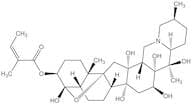
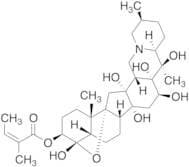
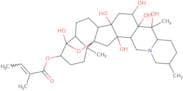
Cevadine, with the CAS number 62-59-9, is a naturally occurring alkaloid primarily derived from the plant species of the genus *Cevadilla*. It is characterized by its complex molecular structure, which includes a bicyclic framework. Cevadine exhibits a range of biological activities, including analgesic and anti-inflammatory properties, making it of interest in pharmacological research. The compound is known to interact with various neurotransmitter systems, which may contribute to its effects. Cevadine is typically found in low concentrations in its natural sources and may require extraction and purification for study or application. As with many alkaloids, it is important to handle cevadine with care due to its potential toxicity and the need for proper dosage in therapeutic contexts. Its chemical properties, such as solubility and stability, can vary depending on environmental conditions, which is crucial for its application in medicinal chemistry and drug formulation.
Formula:C32H49NO9
InChI:InChI=1/C32H49NO9/c1-6-18(3)25(35)41-24-11-12-26(4)19-8-9-20-28(37)13-23(34)31(39)21(29(28,38)16-30(20,26)42-32(19,24)40)15-33-14-17(2)7-10-22(33)27(31,5)36/h6,17,19-24,34,36-40H,7-16H2,1-5H3/b18-6-/t17-,19-,20-,21-,22-,23-,24-,26-,27+,28+,29+,30+,31-,32?/m0/s1
InChI key:InChIKey=DBUCFOVFALNEOO-HWBIYQLFSA-N
SMILES:C[C@@]12[C@]34[C@]([C@@]5(O)[C@@](O)(C3)[C@]6([C@](O)([C@@H](O)C5)[C@](C)(O)[C@]7(N(C6)C[C@@H](C)CC7)[H])[H])(CC[C@@]1([C@](O)(O4)[C@@H](OC(/C(=C\C)/C)=O)CC2)[H])[H]
Synonyms:- (3Beta,4Alpha,9Beta,16Beta)-4,12,14,16,17,20-Hexahydroxy-4,9-Epoxycevan-3-Yl 2-Methylbut-2-Enoate
- (3beta,4alpha,9beta,16beta)-4,12,14,16,17,20-hexahydroxy-4,9-epoxycevan-3-yl (2Z)-2-methylbut-2-enoate
- (3beta,4alpha,9beta,16beta)-4,12,14,16,17,20-hexahydroxy-4,9-epoxycevan-3-yl (2Z)-2-methylbut-2-enoate sulfate (salt)
- (3beta,9beta,16beta)-4,12,14,16,17,20-hexahydroxy-4,9-epoxycevan-3-yl (2Z)-2-methylbut-2-enoate
- (Z)-4-alpha,9-Epoxycevane-3-beta,4,12,14,16-beta,17,20-heptol 3-(2-methyl-2-butenoate)
- Brn 0072445
- Cevadene
- Cevadin
- Cevane-3,4,12,14,16,17,20-heptol, 4,9-epoxy-, 3-((2Z)-2-methyl-2-butenoate), (3beta,4alpha,16beta)-
- Cevane-3,4,12,14,16,17,20-heptol, 4,9-epoxy-, 3-(2-methyl-2-butenoate), (3beta(Z),4alpha,16beta)-
- Cevane-3,4,12,14,16,17,20-heptol, 4,9-epoxy-, 3-(2-methyl-2-butenoate), [3β(Z),4α,16β]-
- Cevane-3,4,12,14,16,17,20-heptol, 4,9-epoxy-, 3-[(2Z)-2-methyl-2-butenoate], (3β,4α,16β)-
- Cevane-3-beta,4-beta,12,14,16-beta,17,20-heptol, 4,9-epoxy-, 3-(2-methylcrotonate), (Z)-
- Cevane-3beta,4beta,12,14,16beta,17,20-heptol, 4,9-epoxy-, 3-(2-methylcrotonate), (Z)- (8CI)
- Cevane-3β,4β,12,14,16β,17,20-heptol, 4,9-epoxy-, 3-(2-methylcrotonate), (Z)-
- Nsc 93767
- Veratrine (crystallized)
- Veratrine (crystallized) (VAN)
- 4-21-00-06820 (Beilstein Handbook Reference)
- Cevadine
- Cevadine
- .alpha.-Veratrine
- Cevane-3.beta.,4.beta.,12,14,16.beta.,17,20-heptol, 4,9-epoxy-, 3-((Z)-2-methylcrotonate), (Z)-
- Nsc93767
- VERATRINE(RG)
- (z)-te
- 4-beta,12,14,16-beta,17,20-heptol,4,9-epoxy-cevane-3-bet3-(2-methylcrotona
- VERATRINE
- (z)-4-alpha,9-epoxycevane-3-beta,4,12,14,16-beta,17,20-heptol3-(2-methyl-2-b
- Cevane-3,4,12,14,16,17,20-heptol, 4,9-epoxy-, 3-(2-methyl-2-butenoate), [3.beta.(Z),4.alpha.,16.beta.]-
- 4α,9-Epoxycevane-3β,4,12,14,16β,17,20-heptol 3-[(Z)-2-methyl-2-butenoate]
- See more synonyms
Sort by
Purity (%)
0
100
|
0
|
50
|
90
|
95
|
100
Found 4 products.
Cevadine
CAS:Natural alkaloidFormula:C32H49NO9Purity:≥ 95.0 % (HPLC)Color and Shape:PowderMolecular weight:591.74Cevadine
CAS:Controlled ProductApplications Cevadine is a biopesticide used in the agriculture industry. Insecticide.
References Prestes, O. et al.: J. Sep. Sci., 35, 861 (2012);Formula:C32H49NO9Color and Shape:NeatMolecular weight:591.733Veratrine
CAS:Veratrine is an alkaloid derivative, which is extracted from the seeds of various plants belonging to the Veratrum genus. This compound primarily acts as a neurotoxic agent that modifies the normal functioning of sodium ion channels in nerve and muscle cells. By prolonging the opening of these channels, Veratrine disrupts the action potentials, leading to sustained depolarization of the nerve membranes and subsequent muscle contractions.Formula:C32H49NO9Purity:Min. 95%Molecular weight:591.7 g/mol