CAS 621-06-7
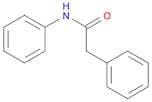
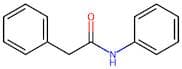
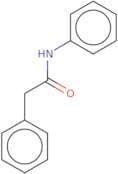
:2-phenylacetanilide
Description:
2-Phenylacetanilide, also known as N-(2-phenylacetyl)aniline, is an organic compound characterized by its amide functional group. It features a phenyl group attached to the acetamide structure, making it a derivative of both acetic acid and aniline. This compound typically appears as a white to off-white crystalline solid and is sparingly soluble in water but more soluble in organic solvents such as ethanol and acetone. Its melting point and boiling point can vary based on purity and specific conditions. 2-Phenylacetanilide is often used in organic synthesis and may serve as an intermediate in the production of pharmaceuticals and dyes. Additionally, it exhibits properties that can be relevant in medicinal chemistry, particularly in the development of analgesic and anti-inflammatory agents. Safety data indicates that, like many organic compounds, it should be handled with care, as it may pose health risks if ingested or inhaled. Proper laboratory practices should be followed when working with this substance.
Formula:C14H13NO
InChI:InChI=1/C14H13NO/c16-14(11-12-7-3-1-4-8-12)15-13-9-5-2-6-10-13/h1-10H,11H2,(H,15,16)
SMILES:c1ccc(cc1)CC(=Nc1ccccc1)O
Synonyms:- 2,N-Diphenylacetamide
- N,2-diphenylacetamide
Sort by
Purity (%)
0
100
|
0
|
50
|
90
|
95
|
100
Found 4 products.
2-Phenyl-N-phenylacetamide
CAS:2-Phenyl-N-phenylacetamide is an amide that is a potent inhibitor of cholesterol acyltransferase. It has been shown to be effective in animal models of insulin resistance and hypertension, as well as in humans. 2-Phenyl-N-phenylacetamide inhibits the activity of cholesterol acyltransferase by competitive inhibition and thereby reduces the production of triglycerides. This drug also inhibits the synthesis of phospholipids and bile acids, which are important for fat digestion. 2-Phenyl-N-phenylacetamide reacts with phosphorus pentoxide to form phenoxyacetic acid, which is hydrolyzed to phenoxyacetate and phenol. The hydroxy group on phenol reacts with aryl halides to form aryl esters. These reactions lead to the formation of divalent hydrocarbon intermediates such as malonic acid, which can be used for energy production through oxidation or as precursorsFormula:C14H13NOPurity:Min. 95%Molecular weight:211.26 g/molN,2-Diphenylacetamide
CAS:Formula:C14H13NOPurity:98%Color and Shape:Liquid, No data available.Molecular weight:211.264