CAS 621-91-0
:Hydroquinone dibenzyl ether
Description:
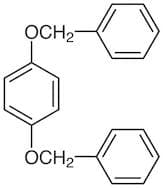
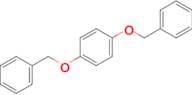
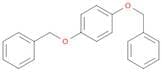
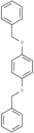
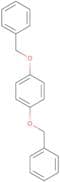
Hydroquinone dibenzyl ether, with the CAS number 621-91-0, is an organic compound characterized by its structure, which features two benzyl groups attached to a hydroquinone moiety. This compound is typically a white to pale yellow crystalline solid, exhibiting moderate solubility in organic solvents such as ethanol and ether, but limited solubility in water. Hydroquinone dibenzyl ether is known for its antioxidant properties, making it useful in various applications, including as a stabilizer in polymer formulations and as a reagent in organic synthesis. It can undergo reactions typical of phenolic compounds, such as oxidation and substitution. Additionally, it is important to handle this compound with care, as it may pose health risks if ingested or inhaled, and appropriate safety measures should be taken during its use. Overall, hydroquinone dibenzyl ether is valued in both industrial and research settings for its chemical reactivity and functional properties.
Formula:C20H18O2
InChI:InChI=1S/C20H18O2/c1-3-7-17(8-4-1)15-21-19-11-13-20(14-12-19)22-16-18-9-5-2-6-10-18/h1-14H,15-16H2
InChI key:InChIKey=DYULYMCXVSRUPB-UHFFFAOYSA-N
SMILES:O(CC1=CC=CC=C1)C2=CC=C(OCC3=CC=CC=C3)C=C2
Synonyms:- 1,4-Bis(Benzyloxy)Benzene
- 1,4-Bis(phenylmethoxy)benzene
- 1,4-Di(benzyloxy)benzene
- Benzene, 1,4-bis(phenylmethoxy)-
- Benzene, p-bis(benzyloxy)-
- Dibenzyloxybenzene,98%
- Hydroquinone dibenzyl ether
- NSC 2206
- Quinol Dibenzyl Ether
- Ts 425
- p-Bis(benzyloxy)benzene
- p-Di(benzyloxy)benzene
- See more synonyms
Sort by
Purity (%)
0
100
|
0
|
50
|
90
|
95
|
100
Found 6 products.
1,4-Dibenzyloxybenzene
CAS:Formula:C20H18O2Purity:>98.0%(GC)Color and Shape:White to Light yellow powder to crystalMolecular weight:290.361,4-Dibenzyloxybenzene
CAS:1,4-Dibenzyloxybenzene is a aromatic sensitizer.Formula:C20H18O2Color and Shape:SolidMolecular weight:290.361,4-Dibenzyloxybenzene
CAS:1,4-Dibenzyloxybenzene is a diphenyl ether that reacts with chloride in an acidic environment to form 1,4-dichlorobenzene. This reaction is catalyzed by the presence of a reducer such as hydroxylamine or hydrazine. The rate of this reaction is dependent on the temperature and the concentration of reactants. Magnetic resonance spectroscopy has shown that 1,4-dibenzyloxybenzene has a benzyl group and a hydroxy group. This molecule can be synthesized from benzaldehyde and phenol with an acid catalyst in a system that includes polyvinyl alcohol as well as a reducer.
1,4-Dibenzyloxybenzene has been used primarily for its antioxidant properties and its ability to reduce the rate of polymerization reactions.Formula:C20H18O2Purity:Min. 95%Color and Shape:PowderMolecular weight:290.36 g/mol