CAS 6220-47-9
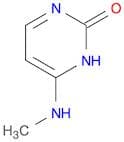
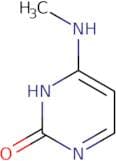
:6-(Methylamino)-2(1H)-pyrimidinone
Description:
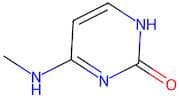
6-(Methylamino)-2(1H)-pyrimidinone, with the CAS number 6220-47-9, is an organic compound characterized by its pyrimidinone structure, which features a pyrimidine ring substituted with a methylamino group. This compound typically exhibits properties associated with heterocyclic compounds, including potential solubility in polar solvents due to the presence of the amino group. It may participate in hydrogen bonding, influencing its reactivity and interactions with other molecules. The methylamino substitution can enhance its biological activity, making it of interest in pharmaceutical research, particularly in the development of compounds with potential therapeutic applications. The compound's stability and reactivity can be influenced by factors such as pH and temperature, and it may undergo various chemical transformations, including methylation or oxidation. Overall, 6-(Methylamino)-2(1H)-pyrimidinone is a versatile compound with potential applications in medicinal chemistry and related fields.
Formula:C5H7N3O
InChI:InChI=1S/C5H7N3O/c1-6-4-2-3-7-5(9)8-4/h2-3H,1H3,(H2,6,7,8,9)
InChI key:InChIKey=PJKKQFAEFWCNAQ-UHFFFAOYSA-N
SMILES:N(C)C=1NC(=O)N=CC1
Synonyms:- 2(1H)-Pyrimidinone, 4-(methylamino)-
- 2(1H)-Pyrimidinone, 6-(methylamino)-
- 4-Methylcytosine
- 6-(Methylamino)-2(1H)-pyrimidinone
- Cytosine, N-methyl-
- N-Methylcytosine
- N4-Methylcytosine
- N<sup>4</sup>-Methylcytosine
Sort by
Purity (%)
0
100
|
0
|
50
|
90
|
95
|
100
Found 4 products.
2(1H)-Pyrimidinone, 4-(methylamino)- (9CI)
CAS:Formula:C5H7N3OPurity:95%Color and Shape:SolidMolecular weight:125.12866-(Methylamino)pyrimidin-2(1H)-one
CAS:6-(Methylamino)pyrimidin-2(1H)-onePurity:95%Molecular weight:125.13g/mol2(1H)-Pyrimidinone, 4-(methylamino)-(9CI)
CAS:2(1H)-Pyrimidinone, 4-(methylamino)- (9CI) is a chemical compound that has been shown to inhibit the transcriptional regulation of DNA replication in bacteria. In vitro assays have indicated that 2(1H)-pyrimidinone, 4-(methylamino) exhibits no significant toxicity to mammalian cells or higher eukaryotes. The mechanism of action of this drug is not known, but it has been hypothesized that the compound may be interacting with DNA replication by binding to the enzyme. This drug may also be inhibiting bacterial growth by binding to bacterial DNA and interfering with the process of replication.
Formula:C5H7N3OPurity:Min. 95%Molecular weight:125.13 g/molRef: 3D-FP156687
Discontinued product