CAS 62257-16-3
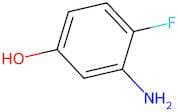
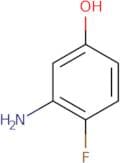
:3-Amino-4-fluorophenol
Description:
3-Amino-4-fluorophenol, with the CAS number 62257-16-3, is an organic compound characterized by the presence of both an amino group (-NH2) and a fluorine atom attached to a phenolic ring. This compound typically appears as a solid and is soluble in polar solvents due to the hydroxyl group (-OH) and amino group, which can engage in hydrogen bonding. The fluorine atom introduces unique electronic properties, influencing the compound's reactivity and potential applications. 3-Amino-4-fluorophenol is often utilized in the synthesis of dyes, pharmaceuticals, and agrochemicals, owing to its ability to participate in various chemical reactions, such as nucleophilic substitutions and coupling reactions. Additionally, the presence of both amino and hydroxyl functional groups allows for further derivatization, making it a versatile intermediate in organic synthesis. Safety data should be consulted, as with any chemical, to understand its handling and potential hazards.
Formula:C6H6FNO
InChI:InChI=1S/C6H6FNO/c7-5-2-1-4(9)3-6(5)8/h1-3,9H,8H2
InChI key:InChIKey=VJCSFNNTQGRAKH-UHFFFAOYSA-N
SMILES:NC1=C(F)C=CC(O)=C1
Synonyms:- 2-Fluoro-5-hydroxyaniline
- 6004 3-Amino-4-Fluoro Phenol
- Phenol, 3-amino-4-fluoro-
- 2-Fluoro-5-hydroxylaniline
- 3-Amino-4-fluorophenol
Sort by
Purity (%)
0
100
|
0
|
50
|
90
|
95
|
100
Found 4 products.
3-Amino-4-fluorophenol
CAS:3-Amino-4-fluorophenolFormula:C6H6FNOPurity:97%Color and Shape: very dark red to very dark brown solidMolecular weight:127.12g/mol3-Amino-4-fluorophenol
CAS:3-Amino-4-fluorophenol (3AFP) is a byproduct of the synthesis of fluorinated anilines. 3AFP can be removed from the reaction mixture and purified by chromatography to produce a relatively pure product. 3AFP has been shown to have antitumor activity in vivo, with a low side effect profile. It also has anti-inflammatory properties, which may be due to its ability to inhibit prostaglandin synthesis. 3AFP has been shown to have fluorescence properties that can be used for quantification purposes. The compound is also likely to bind to factor receptors, and can therefore be used as a synthetic growth factor for cells in culture.
Formula:C6H6FNOPurity:Min. 95%Color and Shape:PowderMolecular weight:127.12 g/mol