CAS 623-72-3
:ethyl 3-hydroxypropanoate
Description:
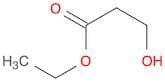
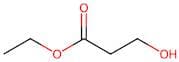
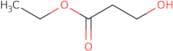
Ethyl 3-hydroxypropanoate, with the CAS number 623-72-3, is an ester that is characterized by its fruity odor and flavor, making it useful in the food and fragrance industries. It is a colorless to pale yellow liquid that is soluble in organic solvents but has limited solubility in water. The compound features a hydroxyl group (-OH) attached to the propanoate chain, which contributes to its reactivity and potential for hydrogen bonding. Ethyl 3-hydroxypropanoate can be synthesized through the esterification of 3-hydroxypropanoic acid with ethanol, typically in the presence of an acid catalyst. Its chemical structure allows it to participate in various chemical reactions, including esterification and transesterification. In terms of safety, it is important to handle this compound with care, as it may cause irritation to the skin and eyes. Overall, ethyl 3-hydroxypropanoate is a versatile compound with applications in both synthetic organic chemistry and the flavoring industry.
Formula:C5H10O3
InChI:InChI=1/C5H10O3/c1-2-8-5(7)3-4-6/h6H,2-4H2,1H3
SMILES:CCOC(=O)CCO
Synonyms:- 3-Hydroxy-Propionic Acid Ethyl Ester
- Propanoic acid, 3-hydroxy-, ethyl ester
- Ethyl 3-hydroxypropanoate
Sort by
Purity (%)
0
100
|
0
|
50
|
90
|
95
|
100
Found 4 products.
Ethyl 3-hydroxypropanoate
CAS:Formula:C5H10O3Purity:95%Color and Shape:LiquidMolecular weight:118.1311Ethyl 3-hydroxypropanoate
CAS:Formula:C5H10O3Purity:95%Color and Shape:Liquid, No data available.Molecular weight:118.132Ethyl 3-hydroxypropanoate
CAS:Ethyl 3-hydroxypropanoate is an oxidant that can be used in organic synthesis. It has been shown to be a powerful agent for the oxidation of alcohols, amines, and thiols. The mechanism of this reaction is most likely due to the formation of an enamine intermediate from the alkene and malonate. This intermediate then reacts with water to form ethyl formate, which undergoes dehydration to release ethyl formate. Ethyl 3-hydroxypropanoate can also be used as a solvent and reactant in reactions involving acrylics or other esters, such as in the production of polyurethanes or polyesters.Formula:C5H10O3Purity:Min. 95%Color and Shape:Clear LiquidMolecular weight:118.13 g/mol