CAS 623-95-0
:N,N′-Dipropylurea
Description:
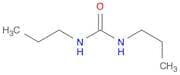
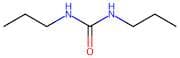
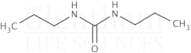
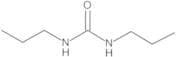
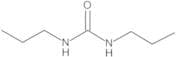
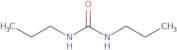
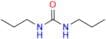
N,N′-Dipropylurea is an organic compound characterized by its urea functional group, where two propyl groups are attached to the nitrogen atoms. It has the molecular formula C₇H₁₄N₂O and is typically a white crystalline solid at room temperature. This compound is soluble in water and organic solvents, making it versatile for various applications in chemical synthesis and research. N,N′-Dipropylurea is known for its role as a reagent in organic chemistry, particularly in the synthesis of other compounds and as a potential stabilizer in certain formulations. It exhibits moderate toxicity, necessitating appropriate safety precautions during handling. Additionally, it can participate in hydrogen bonding due to the presence of the urea moiety, influencing its interactions in biological systems and chemical reactions. Overall, N,N′-Dipropylurea is a significant compound in both industrial and laboratory settings, valued for its chemical properties and reactivity.
Formula:C7H16N2O
InChI:InChI=1S/C7H16N2O/c1-3-5-8-7(10)9-6-4-2/h3-6H2,1-2H3,(H2,8,9,10)
InChI key:InChIKey=AWHORBWDEKTQAX-UHFFFAOYSA-N
SMILES:C(NCCC)(NCCC)=O
Synonyms:- 1,3-Di-n-propylurea
- 1,3-Dipropylurea
- Urea, 1,3-dipropyl-
- Urea, N,N′-dipropyl-
- N,N′-Dipropylurea
Sort by
Purity (%)
0
100
|
0
|
50
|
90
|
95
|
100
Found 10 products.
N,N''-Dipropylurea
CAS:Formula:C7H16N2OPurity:≥ 97%Color and Shape:White to off-white powderMolecular weight:144.21Chlorpropamide EP Impurity B
CAS:Controlled ProductFormula:C7H16N2OColor and Shape:NeatMolecular weight:144.215N,N’-Dipropylurea
CAS:Controlled ProductFormula:C7H16N2OColor and Shape:WhiteMolecular weight:144.2151,3-Dipropylurea
CAS:1,3-Dipropylurea is a nucleophilic organic compound. It is soluble in organic solvents such as benzyl alcohol, nitrous oxide, and ethylene glycol. It also has a constant boiling point of 215°C at atmospheric pressure. The reaction rate for the formation of 1,3-dipropylurea from benzaldehyde and propylene oxide is dependent on the solvent used. The yields are higher in polar solvents such as nitrous oxide or ethylene glycol than in nonpolar solvents like benzene or hexane. This reaction can be catalyzed by cyanoborohydride and the use of a base such as sodium hydroxide or potassium tert-butoxide speeds up the reaction rate considerably.
Formula:C7H16N2OPurity:Min. 97 Area-%Color and Shape:PowderMolecular weight:144.21 g/mol