CAS 62353-77-9
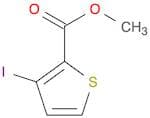
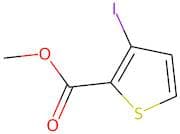
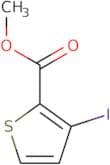
:2-Thiophenecarboxylic acid, 3-iodo-, methyl ester
Description:
2-Thiophenecarboxylic acid, 3-iodo-, methyl ester is an organic compound characterized by the presence of a thiophene ring, a carboxylic acid functional group, and an iodine substituent at the 3-position of the thiophene. As a methyl ester, it features a methoxy group (-OCH3) attached to the carboxylic acid, which enhances its solubility in organic solvents. This compound typically exhibits a pale yellow to light brown appearance and is known for its potential applications in organic synthesis and as an intermediate in the production of pharmaceuticals and agrochemicals. The presence of the iodine atom can impart unique reactivity, making it useful in various chemical transformations, including nucleophilic substitutions and coupling reactions. Additionally, the thiophene ring contributes to the compound's aromatic character, influencing its electronic properties and stability. Safety data should be consulted for handling, as with many halogenated compounds, it may pose health risks if not managed properly.
Formula:C6H5IO2S
Sort by
Purity (%)
0
100
|
0
|
50
|
90
|
95
|
100
Found 4 products.
3-Iodo-thiophene-2-carboxylic acid Methyl ester
CAS:Formula:C6H5IO2SPurity:98%Color and Shape:SolidMolecular weight:268.0722Methyl 3-Iodothiophene-2-Carboxylate
CAS:Methyl 3-Iodothiophene-2-CarboxylatePurity:97%Molecular weight:268.07g/molMethyl 3-iodothiophene-2-carboxylate
CAS:Formula:C6H5IO2SPurity:95.0%Color and Shape:SolidMolecular weight:268.07Methyl3-iodothiophene-2-carboxylate
CAS:Methyl3-iodothiophene-2-carboxylate is a chemical compound that is involved in the biosynthesis of eicosanoids. It can be synthesized by the cyclization of the corresponding lactam to produce an intermediate, which is then converted to methyl3-iodothiophene-2-carboxylate by hydrolysis or reduction. This compound has been shown to inhibit malaria parasites such as Plasmodium falciparum and Plasmodium vivax. Methyl3-iodothiophene-2-carboxylate also inhibits the growth of bacteria such as Staphylococcus aureus and Bacillus subtilis. The mechanism of action is believed to be due to its ability to inhibit protein synthesis by binding with ribosomes in prokaryotic cells.END>Formula:C6H5IO2SPurity:Min. 95%Molecular weight:268.07 g/mol