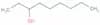
CAS 624-51-1
:3-Nonanol
Description:
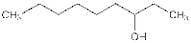
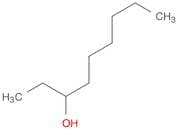
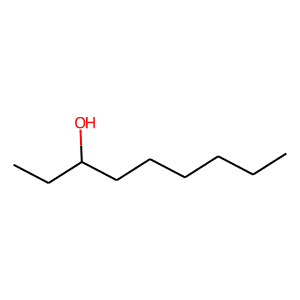
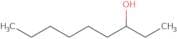
3-Nonanol, with the CAS number 624-51-1, is a straight-chain aliphatic alcohol characterized by its nine-carbon structure and a hydroxyl (-OH) functional group located on the third carbon atom. This compound is a colorless liquid at room temperature and possesses a distinctive, pleasant odor, often described as floral or fatty, which makes it useful in the fragrance industry. Its molecular formula is C9H20O, and it has a moderate boiling point, indicating it is relatively volatile. 3-Nonanol is soluble in organic solvents but has limited solubility in water due to its hydrophobic carbon chain. It is primarily used in the synthesis of various chemical compounds, as well as in the formulation of perfumes and flavoring agents. Additionally, 3-Nonanol can exhibit antimicrobial properties, making it of interest in various applications, including cosmetics and personal care products. As with many alcohols, it should be handled with care, as it can be flammable and may cause irritation upon contact with skin or eyes.
Formula:C9H20O
InChI:InChI=1S/C9H20O/c1-3-5-6-7-8-9(10)4-2/h9-10H,3-8H2,1-2H3
InChI key:InChIKey=GYSCXPVAKHVAAY-UHFFFAOYSA-N
SMILES:C(CCCCCC)(CC)O
Synonyms:- (3R)-nonan-3-ol
- (3S)-nonan-3-ol
- Ethyl n-hexyl carbinol
- Nonan-3-Ol
- Nonanol-3
- dl-Nonan-3-ol
- 3-Nonanol
- (±)-3-Nonanol
Sort by
Purity (%)
0
100
|
0
|
50
|
90
|
95
|
100
Found 5 products.
3-Nonanol, 98%
CAS:This Thermo Scientific Chemicals brand product was originally part of the Alfa Aesar product portfolio. Some documentation and label information may refer to the legacy brand. The original Alfa Aesar product / item code or SKU reference has not changed as a part of the brand transition to Thermo SciFormula:C9H20OPurity:98%Color and Shape:Liquid, Clear colorlessMolecular weight:144.263-Nonanol
CAS:3-Nonanol is a chiral compound that is used as a catalyst in oil solutions. It has been shown to be effective at high concentrations, and the kinetic of this reaction has been studied under constant pressure. The catalytic activity of 3-nonanol is based on its ability to form an ion-pair with malonic acid and convert it into butanoic acid. 3-Nonanol can be detected in high concentrations by following the reaction with an infrared spectrophotometer, which detects the characteristic absorption bands for this compound. Symptoms of exposure to 3-nonanol include skin irritation, eye irritation, respiratory tract irritation, and central nervous system depression.Formula:C9H20OPurity:Min. 95%Color and Shape:Clear LiquidMolecular weight:144.25 g/mol