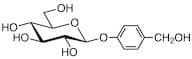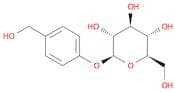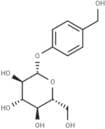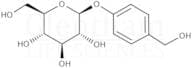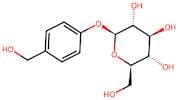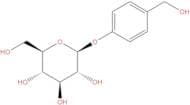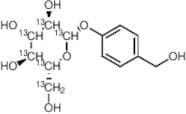
CAS 62499-27-8
:Gastrodin
Description:
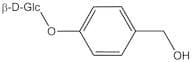
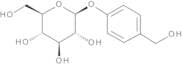
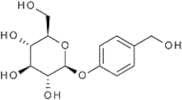
Gastrodin is a naturally occurring phenolic compound primarily derived from the orchid Gastrodia elata, which is traditionally used in herbal medicine. It is known for its neuroprotective and anti-inflammatory properties, making it a subject of interest in pharmacological research. Gastrodin exhibits a molecular formula that reflects its complex structure, which includes a glucose moiety linked to a phenolic compound. This substance is soluble in water and exhibits low toxicity, contributing to its safety profile in medicinal applications. Research has indicated that gastrodin may enhance cognitive function and has potential therapeutic effects in conditions such as Alzheimer's disease and other neurodegenerative disorders. Additionally, it has been studied for its antioxidant properties, which help mitigate oxidative stress in cells. Overall, gastrodin represents a significant compound in both traditional medicine and modern pharmacology, with ongoing studies aimed at fully elucidating its mechanisms of action and potential health benefits.
Formula:C13H18O7
InChI:InChI=1/C13H18O7/c14-5-7-1-3-8(4-2-7)19-13-12(18)11(17)10(16)9(6-15)20-13/h1-4,9-18H,5-6H2/t9-,10-,11+,12-,13-/m1/s1
InChI key:InChIKey=PUQSUZTXKPLAPR-UJPOAAIJSA-N
SMILES:O([C@@H]1O[C@H](CO)[C@@H](O)[C@H](O)[C@H]1O)C2=CC=C(CO)C=C2
Synonyms:- 4-(Hydroxymethyl)phenyl β-<span class="text-smallcaps">D</span>-glucopyranoside
- 4-(hydroxymethyl)phenyl beta-D-glucopyranoside
- 4-(β-<span class="text-smallcaps">D</span>-Glucopyranosyl)-benzylalcohol
- 4-(β-<span class="text-smallcaps">D</span>-Glucopyranosyloxy)benzyl alcohol
- 4-Hydroxybenzyl alcohol 4-O-bata-D-glucoside
- 4-Hydroxybenzyl alcohol 4-O-β-<span class="text-smallcaps">D</span>-glucopyranoside
- Gastrodine
- β-<span class="text-smallcaps">D</span>-Glucopyranoside, 4-(hydroxymethyl)phenyl
- 4-(Hydroxymethyl)phenyl β-D-glucopyranoside
- 4-Hydroxybenzyl alcohol 4-O-β-D-glucopyranoside
- Gastrodin
- β-D-Glucopyranoside, 4-(hydroxymethyl)phenyl
- 4-(β-D-Glucopyranosyloxy)benzyl alcohol
- 4-O-BETA-D-GLUCOPYRANOSYLOXYBENZYL ALCOHOL
- (2R,3S,4S,5R,6S)-2-HYDROXYMETHYL-6-(4-HYDROXYMETHYL-PHENOXY)-TETRAHYDRO-PYRAN-3,4,5-TRIOL
- Gastro enterical
- p-(Hydroxymethyl)phenyl β-D-glucopyranoside
- See more synonyms
Sort by
Purity (%)
0
100
|
0
|
50
|
90
|
95
|
100
Found 14 products.
Gastrodin
CAS:Formula:C13H18O7Purity:>98.0%(HPLC)Color and Shape:White to Almost white powder to crystalMolecular weight:286.28Gastrodin
CAS:Other glycosides, natural or reproduced by synthesis, and their salts, ethers, esters and other derivativesFormula:C13H18O7Color and Shape:White PowderMolecular weight:286.10525b-D-Glucopyranoside, 4-(hydroxymethyl)phenyl
CAS:Formula:C13H18O7Purity:98%Color and Shape:SolidMolecular weight:286.2778Gastrodin
CAS:Gastrodin (Gastrodine), an anti-inflammatory polyphenol, is extracted from Chinese natural herbal Gastrodia elata Blume.Formula:C13H18O7Purity:99.87%Color and Shape:White CrystalMolecular weight:286.28Gastrodin
CAS:Gastrodin has anti-inflammatory activity, can significantly attenuate levels of neurotoxic proinflammatory mediators and proinflammatory cytokines by inhibition of the NF-κB signaling pathway and phosphorylation of MAPKs in LPS-stimulated microglial cells, suggests that gastrodin has a potential as an anti-inflammatory drug candidate in neurodegenerative diseases.Formula:C13H18O7Purity:95%~99%Color and Shape:PowderMolecular weight:286.28Gastrodin
CAS:Natural glycosideFormula:C13H18O7Purity:≥ 98.0 % (HPLC)Color and Shape:PowderMolecular weight:286.28Gastrodin
CAS:Controlled ProductApplications Gastrodin up regulates heme oxygenase-1 expression through activation of p38 MAPK/Nrf2 signaling pathway thus protecting the SH-SY5Y cells from MPP+-induced oxidative cell death.
References Jiang, G., et. al.: Neurochem. Int., 75, 79 (2014)Formula:C13H18O7Color and Shape:NeatMolecular weight:286.28Gastrodin
CAS:Gastrodin is a biochemical compound, classified as a glucoside, derived primarily from the root of Gastrodia elata, an orchid native to East Asia. It is typically obtained through extraction and purification processes from this natural plant source.Formula:C13H18O7Purity:Min. 95%Color and Shape:White PowderMolecular weight:286.28 g/mol