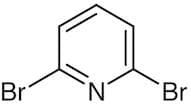
CAS 626-05-1
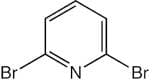
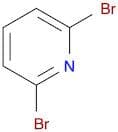
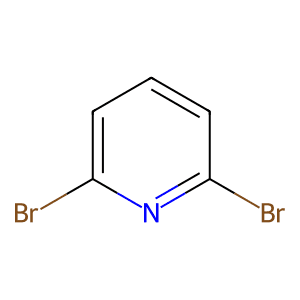
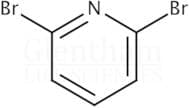
:2,6-Dibromopyridine
- 2,6-Dibromo Pyridine
- NSC 613
- Pyridine, 2,6-dibromo-
- 2,6-Dibromopyridine
2,6-Dibromopyridine, 98%
CAS:2,6-Dibromopyridine is used as a tridentate chelating ligand and in the formation of macrocycles containing the terpyridine moiety. It is also used to produce 6-bromo-2-methoxypyridine. This Thermo Scientific Chemicals brand product was originally part of the Alfa Aesar product portfolio. Some docum
Formula:C5H3Br2NPurity:98%Color and Shape:Crystals or powder or crystalline powder or fused solid, White to cream to pale brown to grayMolecular weight:236.89Ref: IN-DA003311
5g24.00€10g25.00€1kg185.00€25g25.00€50g31.00€5kgTo inquire100g40.00€250g63.00€500g119.00€2,6-Dibromopyridine
CAS:2,6-DibromopyridineFormula:C5H3Br2NPurity:≥95%Color and Shape: white to light brown solidMolecular weight:236.89201g/mol2,6-Dibromopyridine
CAS:Formula:C5H3Br2NPurity:≥ 98.0%Color and Shape:White to off-white powderMolecular weight:236.902,6-Dibromopyridine
CAS:Formula:C5H3Br2NPurity:>98.0%(GC)Color and Shape:White to Almost white powder to crystalMolecular weight:236.892,6-Dibromopyridine
CAS:Controlled ProductApplications 2,6-Dibromopyridine is used as a starting material to synthesize 2,2’-bipyridines (such as 5-Cyano-1,6-dihydro-6-oxo-[3,4'-bipyridine]-2-carboxylic Acid [C979150]) via a Stille-type cross-coupling reaction. 2,6-Dibromopyridine is also used as a reagent to synthesize pyridylpyrimidine fungicides, compounds that eliminate fungi by cycling copper through the cell membrane, where it reaches toxic levels.
References Hargreaves, S., et al.: Tetrahedron Lett., 41, 1653 (2000); Heller, M. & Schubert, U.: J. Org. Chem., 67, 8269 (2002); Simkovsky, N., et al.: J. Chem. Soc. Perk. Trans. 1, 16, 1847 (2002)Formula:C5H3Br2NColor and Shape:NeatMolecular weight:236.892,6-Dibromopyridine
CAS:2,6-Dibromopyridine (2,6-DBP) is a chemical compound that has been used in the synthesis of other organic compounds. It is an aromatic heterocycle with nitrogen atoms at the 2 and 6 positions. 2,6-DBP is a monosubstituted pyridine derivative that undergoes a palladium-catalyzed coupling reaction with an aryl halide to form pyrazoles. This process can be done unsymmetrically by protonating the 2 position of the dibromopyridine molecule. The presence of serine protease has been shown to promote this reaction by increasing the surface area of the substrate.Formula:C5H3Br2NPurity:Min. 98 Area-%Color and Shape:Off-White Yellow PowderMolecular weight:236.89 g/mol