CAS 626-88-0
:1-Bromo-4-methylpentane
Description:
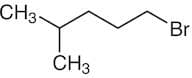
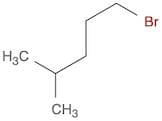
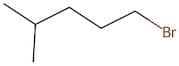
1-Bromo-4-methylpentane is an organic compound classified as a haloalkane, specifically a bromoalkane, due to the presence of a bromine atom in its structure. Its molecular formula is C6H13Br, indicating it consists of six carbon atoms, thirteen hydrogen atoms, and one bromine atom. This compound features a branched alkane structure, with the bromine substituent located on the first carbon of a pentane chain that has a methyl group on the fourth carbon. 1-Bromo-4-methylpentane is typically a colorless to pale yellow liquid at room temperature and has a characteristic odor. It is soluble in organic solvents but has limited solubility in water due to its hydrophobic alkane chain. The presence of the bromine atom makes it a good candidate for nucleophilic substitution reactions, which are common in organic synthesis. Additionally, it can be used as an intermediate in the production of various chemical compounds, including pharmaceuticals and agrochemicals. Proper handling and storage are essential, as it may pose health risks if inhaled or ingested.
Formula:C6H13Br
InChI:InChI=1S/C6H13Br/c1-6(2)4-3-5-7/h6H,3-5H2,1-2H3
InChI key:InChIKey=XZKFBZOAIGFZSU-UHFFFAOYSA-N
SMILES:C(C(C)C)CCBr
Synonyms:- 4-Methyl-1-bromopentane
- 4-Methylpentyl bromide
- Bromomethylpentane
- Isohexyl bromide
- Isopentylmethyl bromide
- NSC 159166
- Pentane, 1-bromo-4-methyl-
- 1-Bromo-4-methylpentane
Sort by
Purity (%)
0
100
|
0
|
50
|
90
|
95
|
100
Found 5 products.
1-Bromo-4-methylpentane
CAS:Formula:C6H13BrPurity:>98.0%(GC)Color and Shape:Colorless to Almost colorless clear liquidMolecular weight:165.071-Bromo-4-methylpentane
CAS:1-Bromo-4-methylpentane is a long-chain, dehydrohalogenated pheromone that has been shown to inhibit the growth of Leishmania by binding to the topoisomerase enzyme. This compound is synthesized from heptadecane and chloroacetonitrile in the presence of cuprate and tetrahydrofuran. 1-Bromo-4-methylpentane has also been shown to be an alkylating agent. It reacts with chloride, converting it into chloroform. The bromine atom on the carbon adjacent to the double bond then attacks a fatty acid, adding it to the molecule. The resulting alkoxycarbonyl group then reacts with a second fatty acid molecule, yielding a new 1-bromoalkoxycarbonyl group.
Formula:C6H13BrPurity:Min. 95%Molecular weight:165.07 g/mol