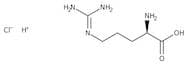
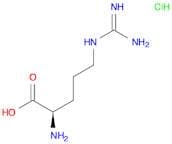
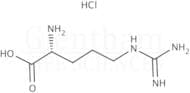
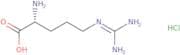
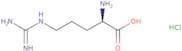
CAS 627-75-8
:D-Arginine, hydrochloride (1:1)
Description:
D-Arginine hydrochloride is a salt form of the amino acid D-arginine, characterized by its basic properties and presence of a positively charged guanidinium group. As a non-proteinogenic amino acid, D-arginine is an isomer of L-arginine, differing in the spatial arrangement of its atoms. This compound is typically encountered as a white crystalline powder, soluble in water, which makes it suitable for various biochemical applications. D-Arginine plays a role in the synthesis of nitric oxide, a critical signaling molecule in the body, and is often studied for its potential effects on cardiovascular health and metabolic processes. The hydrochloride form enhances its stability and solubility, facilitating its use in research and pharmaceutical formulations. Additionally, D-arginine is of interest in studies related to its effects on exercise performance and recovery, as well as its potential role in modulating immune responses. Safety data indicates that while it is generally considered safe for use in research, appropriate handling and dosage should be observed to avoid any adverse effects.
Formula:C6H14N4O2·ClH
InChI:InChI=1S/C6H14N4O2.ClH/c7-4(5(11)12)2-1-3-10-6(8)9;/h4H,1-3,7H2,(H,11,12)(H4,8,9,10);1H/t4-;/m1./s1
InChI key:InChIKey=KWTQSFXGGICVPE-PGMHMLKASA-N
SMILES:C(CCNC(=N)N)[C@H](C(O)=O)N.Cl
Synonyms:- <span class="text-smallcaps">D</span>-Arginine hydrochloride
- <span class="text-smallcaps">D</span>-Arginine, hydrochloride (1:1)
- <span class="text-smallcaps">D</span>-Arginine, monohydrochloride
- Arginine hydrochloride, D-(-)-
- Arginine, monohydrochloride, <span class="text-smallcaps">D</span>-
- Arginine, monohydrochloride, D-
- D-Arginine HCl
- D-Arginine, hydrochloride (1:1)
- D-Arginine, monohydrochloride
- H-D-Arg-OH・HCl
- H-D-Arg・HCl
- Nsc 46710
- N~5~-(diaminomethylidene)-D-ornithine hydrochloride (1:1)
- D-(-)-Arginine Hydrochloride
- See more synonyms
Sort by
Purity (%)
0
100
|
0
|
50
|
90
|
95
|
100
Found 6 products.
D-Arginine monohydrochloride, 98%
CAS:The influence in creatinine metabolismis that by that d-arginine monohydrochloride caused slightly larger increases in muscle creatine. D-Arginyl ethyl ester was synthesized by vigorously stirring D-arginine monohydrochloride and excess anhydrous ethanol in an ice bath. This Thermo Scientific ChemiFormula:C6H15ClN4O2Purity:98%Color and Shape:Powder, White to pale creamMolecular weight:210.66D-Arginine hydrochloride
CAS:D-Arginine hydrochloridePurity:98%Color and Shape:White To Beige PowderMolecular weight:210.66g/molD-Arginine hydrochloride
CAS:D-Arginine HCl is a nonessential amino acid that has been shown to increase the release of acetylcholine in the brain, which is important for learning and memory. It has also been shown to inhibit urea nitrogen production by blocking arginase, an enzyme involved in the synthesis of urea. D-Arginine HCl has been used as a diuretic, but there is some evidence that it may have a biphasic response. This means that it causes increased urination at low doses and decreased urination at higher doses. D-Arginine HCl may be useful as an analgesic agent because it inhibits the production of nω-nitro-l-arginine methyl ester (LNMMA), which causes pain.Formula:C6H14N4O2•HClPurity:Min. 95%Molecular weight:210.66 g/molD-Arginine hydrochloride
CAS:D-Arginine hydrochloride is a useful scaffold, versatile building block, and useful intermediate that is used in research and development as well as a reaction component. It is a complex compound that can be used as a reagent. D-Arginine hydrochloride has CAS No. 627-75-8 and a molecular weight of 130.27 g/mol. The chemical formula for this compound is CHNO2CH2NH2.
Formula:C6H15ClN4O2Molecular weight:210.67 g/mol