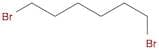
CAS 629-03-8
:1,6-Dibromohexane
Description:
1,6-Dibromohexane is an organic compound characterized by its linear chain structure consisting of six carbon atoms, with bromine atoms attached to the first and sixth carbon positions. Its molecular formula is C6H12Br2, indicating the presence of two bromine substituents. This compound is typically a colorless to pale yellow liquid at room temperature and has a relatively high density compared to water. It is non-polar and exhibits low solubility in water but is soluble in organic solvents such as ethanol and ether. 1,6-Dibromohexane is primarily used in organic synthesis, particularly in the preparation of various brominated compounds and as an intermediate in the production of pharmaceuticals and agrochemicals. It is important to handle this substance with care due to the potential health hazards associated with brominated compounds, including toxicity and environmental concerns. Proper safety measures, including the use of personal protective equipment and adequate ventilation, are recommended when working with this chemical.
Formula:C6H12Br2
InChI:InChI=1S/C6H12Br2/c7-5-3-1-2-4-6-8/h1-6H2
InChI key:InChIKey=SGRHVVLXEBNBDV-UHFFFAOYSA-N
SMILES:C(CCCBr)CCBr
Synonyms:- 1,6-Dibromhexan
- 1,6-Dibromo-n-hexane
- 1,6-Dibromohexano
- Dibromo-1,6 hexane
- Hexamethylene bromide
- Hexamethylene dibromide
- Hexane, 1,6-Dibromo
- Nsc 7306
- α,ω-Dibromohexane
- 1,6-Dibromohexane
Sort by
Purity (%)
0
100
|
0
|
50
|
90
|
95
|
100
Found 10 products.
1,6-Dibromohexane
CAS:Formula:C6H12Br2Purity:>97.0%(GC)Color and Shape:Colorless to Light yellow clear liquidMolecular weight:243.971,6-Dibromohexane
CAS:BR1156 - 1,6-Dibromohexane
Formula:C6H12Br2Purity:95%Color and Shape:ClearMolecular weight:243.971,6-Dibromohexane, 97+%
CAS:1,6-Dibromohexane is used as a reagent in the synthesis of novel benzo[b]xanthone derivatives which have a potential antitumor activity. It is also used as a cross-linker for the cross-linking of glycuronans. This Thermo Scientific Chemicals brand product was originally part of the Alfa Aesar producFormula:C6H12Br2Purity:97+%Color and Shape:Clear colorless to pale yellow, LiquidMolecular weight:243.971,6-Dibromohexane, min. 97%
CAS:Formula:C6H12Br2Purity:min. 97%Color and Shape:Clear, colorless to pale-yellow liquidMolecular weight:243.971,6-Dibromohexane
CAS:Applications 1,6-Dibromohexane is used as a reagent in the synthesis of novel benzo[b]xanthone derivatives which have potential antitumor activity. It is also used as a cross-linker for the cross-linking of glycuronans.
Not a dangerous good if item is equal to or less than 1g/ml and there is less than 100g/ml in the package
References Luo, L., et al.: J. Serb. Chem. Soc., 78, 1301 (2013); Matricardi, P., et al.: Carbohyd. Polym., 27, 215 (1995)Formula:C6H12Br2Color and Shape:NeatMolecular weight:243.9671,6-Dibromohexane
CAS:1,6-Dibromohexane is a chemical compound that belongs to the group of dibromoalkanes. It is a colorless liquid with a boiling point of about 139 degrees Celsius and an odor that is not detectable. It has been used in laboratories as a model system for skin because it reacts with acids to form an acid complex. The reaction mechanism has been determined using FT-IR spectroscopy and quantum mechanics calculations. This compound also has antimicrobial properties and can be used as an agent in vitro tests and gravimetric analysis. 1,6-Dibromohexane has been shown to have hydrogen bonding interactions with l-tartaric acid, which may be responsible for its stability in vivo.Formula:C6H12Br2Purity:Min. 97 Area-%Color and Shape:Clear LiquidMolecular weight:243.97 g/mol