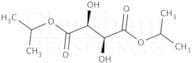
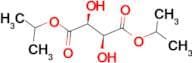
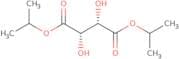
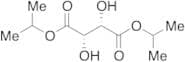
CAS 62961-64-2
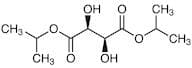
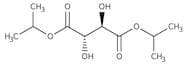
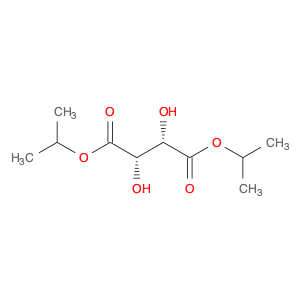
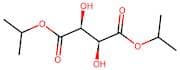
:Diisopropyl (-)-tartrate
Description:
Diisopropyl (-)-tartrate, with the CAS number 62961-64-2, is an organic compound that belongs to the class of tartrates, which are esters derived from tartaric acid. This substance is characterized by its chiral nature, exhibiting optical activity due to the presence of multiple stereocenters. It typically appears as a colorless to pale yellow liquid and is known for its low volatility and moderate solubility in organic solvents. Diisopropyl (-)-tartrate is often utilized as a chiral auxiliary in asymmetric synthesis, facilitating the production of enantiomerically pure compounds. Its applications extend to the pharmaceutical industry, where it plays a role in the development of various drugs. The compound is generally stable under standard conditions but should be handled with care, as with many organic chemicals, to avoid potential hazards. Overall, diisopropyl (-)-tartrate is valued for its utility in stereochemistry and its role in enhancing the efficiency of synthetic processes.
Formula:C10H18O6
InChI:InChI=1S/C10H18O6/c1-5(2)15-9(13)7(11)8(12)10(14)16-6(3)4/h5-8,11-12H,1-4H3/t7-,8-/m0/s1
InChI key:InChIKey=XEBCWEDRGPSHQH-YUMQZZPRSA-N
SMILES:[C@H]([C@@H](C(OC(C)C)=O)O)(C(OC(C)C)=O)O
Synonyms:- (-)-Dipt
- (2S,3S)-Diisopropyl tartrate
- <span class="text-smallcaps">D</span>-(-)-Diisopropyl tartrate
- <span class="text-smallcaps">D</span>-(-)-Tartaric acid diisopropyl ester
- Butanedioic acid, 2,3-dihydroxy-, 1,4-bis(1-methylethyl) ester, (2S,3S)-
- Butanedioic acid, 2,3-dihydroxy-, bis(1-methylethyl) ester, (2S,3S)-
- Butanedioic acid, 2,3-dihydroxy-, bis(1-methylethyl) ester, [S-(R*,R*)]-
- D-(-)-Tartaric Acid Diisopropyl Ester
- Diisopropyl (-)-<span class="text-smallcaps">D</span>-tartrate
- Diisopropyl (-)-tartrate
- Diisopropyl (S,S)-tartrate
- Diisopropyl D-Tartrate
- bis(1-methylethyl) (2R,3S)-2,3-dihydroxybutanedioate
- dipropan-2-yl (2S,3S)-2,3-dihydroxybutanedioate
- See more synonyms
Sort by
Purity (%)
0
100
|
0
|
50
|
90
|
95
|
100
Found 8 products.
Diisopropyl D-(-)-Tartrate
CAS:Formula:C10H18O6Purity:>98.0%(GC)Color and Shape:Colorless to Almost colorless clear liquidMolecular weight:234.25(-)-Diisopropyl D-tartrate, 98%
CAS:This Thermo Scientific Chemicals brand product was originally part of the Alfa Aesar product portfolio. Some documentation and label information may refer to the legacy brand. The original Alfa Aesar product / item code or SKU reference has not changed as a part of the brand transition to Thermo Sci
Formula:C10H18O6Purity:98%Color and Shape:Clear colorless, Liquid or viscous liquidMolecular weight:234.25(2S,3S)-Diisopropyl 2,3-dihydroxysuccinate
CAS:Formula:C10H18O6Purity:98%Color and Shape:LiquidMolecular weight:234.2463D-(-)-Tartaric acid diisopropyl ester
CAS:D-(-)-Tartaric acid diisopropyl esterPurity:98%Molecular weight:234.25g/mol(2S,3S)-Diisopropyl 2,3-dihydroxysuccinate
CAS:Purity:95.0%Color and Shape:Liquid, ClearMolecular weight:234.2480010986328Diisopropyl D-tartrate
CAS:Diisopropyl tartrate is a chemical compound that has been used in the synthesis of antibiotics. It is bifunctional, meaning that it can act as both a nucleophile and a base. The chloride forms a nucleophilic addition with the allyl group, forming an intermediate that is an excellent leaving group for the final product. Diisopropyl tartrate is used to synthesize monomers for polymers, such as chloroprene and styrene, which are used in the manufacture of plastics and rubber. This chemical is also used in catalytic asymmetric reactions, where it acts as a catalyst by stabilizing one enantiomer over another to promote stereoselective reactions.Formula:C10H18O6Purity:Min. 95%Color and Shape:Colorless Clear LiquidMolecular weight:234.25 g/molD-(-)-Diisopropyl Tartrate
CAS:Controlled ProductApplications D-(-)-Diisopropyl Tartrate is a reagent for kinetic resolution of racemic allylic alcohols and α-furfuryl amides by enantioselective epoxidation.
References Lee, E., et al.: J. Org. Chem., 1994, 59 1444; Jung, M., et al.: J. Am. Chem. Soc., 115, 12208 (1993); Wang, Z., et al.: Tetrahedron, 49, 2641 (1993)Formula:C16H17N3O4S2Color and Shape:NeatMolecular weight:379.454