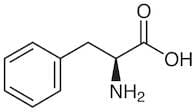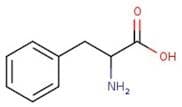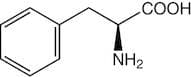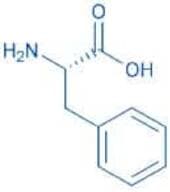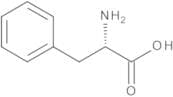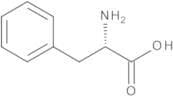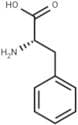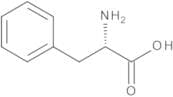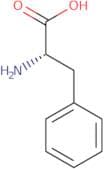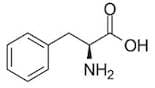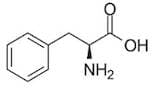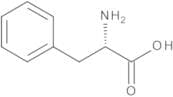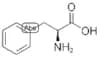
CAS 63-91-2
:L-Phenylalanine
Description:
L-Phenylalanine is an essential amino acid that plays a crucial role in protein synthesis and is a precursor for several important biomolecules, including neurotransmitters such as dopamine, norepinephrine, and epinephrine. It is classified as a non-polar, aromatic amino acid due to its phenyl group, which contributes to its hydrophobic characteristics. L-Phenylalanine exists in two enantiomeric forms, with the L-form being biologically active and utilized by the body. It is typically found in high-protein foods such as meat, fish, eggs, dairy products, and certain plant sources like soybeans. In addition to its nutritional importance, L-Phenylalanine is also used in the production of aspartame, a low-calorie artificial sweetener. The substance is generally recognized as safe when consumed in appropriate amounts, but excessive intake can lead to health issues, particularly in individuals with phenylketonuria (PKU), a genetic disorder that impairs the metabolism of phenylalanine. Overall, L-Phenylalanine is vital for various physiological functions and is an important component of a balanced diet.
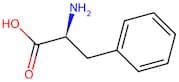
Formula:C9H11NO2
InChI:InChI:1S/C9H11NO2/c10-8(9(11)12)6-7-4-2-1-3-5-7/h1-5,8H,6,10H2,(H,11,12)
InChI key:InChIKey=COLNVLDHVKWLRT-QMMMGPOBSA-N
SMILES:C([C@@H](C(O)=O)N)C1=CC=CC=C1
Synonyms:- (-)-β-Phenylalanine
- (2S)-2-Amino-3-phenylpropanoic acid
- (S)-(-)-Phenylalanine
- (S)-2-Amino-3-Phenylpropionic acid
- (S)-2-Amino-3-phenylpropanoic acid
- (S)-2-Amino-3-phenylpropionic acid~H-Phe-OH
- (S)-α-Amino-β-phenylpropionic acid
- (S)-α-Aminobenzenepropanoic acid
- (S)-α-Aminohydrocinnamic acid
- 151: PN: US20070015162 SEQID: 161 claimed protein
- 3-Phenyl-<span class="text-smallcaps">L</span>-alanine
- 3-Phenyl-L-alanin
- 3-Phenyl-L-alanine
- 3-Phenylalanine
- 3-fenil-L-alanina
- 356: PN: US20070026454 SEQID: 366 claimed protein
- <span class="text-smallcaps">L</span>-(-)-Phenylalanine
- <span class="text-smallcaps">L</span>-Alanine, 3-phenyl-
- Alanine, phenyl-, <span class="text-smallcaps">L</span>-
- Alanine, phenyl-, L-
- Antibiotic FN 1636
- Benzenepropanoic acid, α-amino-, (S)-
- H-L-Phe-Oh
- H-Phe-OH
- L(-)Phenylalaniline
- L-Alanine, 3-phenyl-
- L-Phenylalanie
- L-beta-Phenylalanine
- Nsc 79477
- PHE
- Phenyalanine, L-
- Phenyl-α-alanine
- Phenylalanine
- Phenylalanine, L-
- Secretory protein (human clone HISBA38 precursor)
- α-Amino-β-phenylpropionic acid
- β-Phenyl-<span class="text-smallcaps">L</span>-alanine
- β-Phenyl-L-alanine
- β-Phenyl-α-alanine
- L-Phenylalanine
- BETA-PHENYLALANINE
- DL-2-AMINO-3-PHENYLPROPANOIC ACID
- L-A-AMINOHYDROCINNAMIC ACID
- L-2-AMINO-3-PHENYLPROPIONIC ACID
- L-PHE
- L-ALPHA-AMINO-BETA-PHENYLPROPIONIC ACID
- ALPHA-AMINO-BETA-PHENYL PROPIONIC ACID
- L-2-AMINO-3-PHENYLPROPANOIC ACID
- See more synonyms
Sort by
Purity (%)
0
100
|
0
|
50
|
90
|
95
|
100
Found 26 products.
L-Phenylalanine
CAS:Formula:C9H11NO2Purity:>98.0%(T)(HPLC)Color and Shape:White powder to crystalMolecular weight:165.19L-Phenylalanine, Cell Culture Reagent
CAS:<p>The primary use of L-phenylalanine in the body is in the production of tyrosine, another amino acid. It is an essential amino acid, which is biologically converted into L-tyrosine, another one of the DNA-encoded amino acids, which in turn is converted to L-DOPA and further converted into dopamine, n</p>Formula:C9H11NO2Color and Shape:Powder or crystals or crystalline powder, WhiteMolecular weight:165.19L-Phenylalanine, 99%
CAS:<p>L-phenylalanine, 63-91-2, is an essential, proteinogenic amino acid which serves as metabolite in multiple organisms. Learn more at Thermo Fisher Scientific.</p>Formula:C9H11NO2Purity:99%Color and Shape:White, Crystals or powder or crystalline powderMolecular weight:165.19H-Phe-OH
CAS:<p>Bachem ID: 4031148.</p>Formula:C9H11NO2Purity:> 99%Color and Shape:WhiteMolecular weight:165.19L-Phenylalanine
CAS:M-aminobenzoic acid, technical; p-aminobenzoic acid; 2-ethylamino-5-sulfobenzoic acid; methyl anthranilate, etcFormula:C9H11NO2Color and Shape:White Crystalline PowderMolecular weight:165.19L-Phenylalanine
CAS:L-PhenylalaninePurity:99%Color and Shape:Fine PowderMolecular weight:165.18914g/molL-Phenylalanine
CAS:Formula:C9H11NO2Purity:99.0 - 101.0 %Color and Shape:White crystals or crystalline powderMolecular weight:165.19L-Phenylalanine, GlenCell™, suitable for cell culture
CAS:Formula:C9H11NO2Purity:98.5 - 101.0 %Color and Shape:White crystals or crystalline powderMolecular weight:165.19Aspartame EP Impurity C (Nateglinide EP Impurity D, Tyrosine EP Impurity A)
CAS:Formula:C9H11NO2Color and Shape:White To Off-White SolidMolecular weight:165.19L-Phenylalanine
CAS:L-PhenylalanineFormula:C9H11NO2Purity:98.5%Color and Shape: white to off-white crystalline powderMolecular weight:165.18913g/molL-Phenylalanine
CAS:<p>L-Phenylalanine (3-Phenyl-L-alanine) is an essential amino acid and the precursor of the amino acid tyrosine, acts as an antagonist at α2δ calcium channels.</p>Formula:C9H11NO2Purity:99.37% - 99.87%Color and Shape:Solid CrystallineMolecular weight:165.19L-Phenylalanine
CAS:<p>Impurity Aspartame EP Impurity C<br>Applications L-Phenylalanine (Aspartame EP Impurity C) is an essential amino acid. L-Phenylalanine is biologically converted into L-tyrosine, another one of the DNA-encoded amino acids, which in turn is converted to L-DOPA and further converted into dopamine, norepinephrine, and epinephrine. L-Phenylalanine is produced for medical, feed, and nutritional applications such as in the preparation of Aspartame. Neuroprotective product.<br>References Hollunger, G. et al.: Acta Pharmacol. Toxicol., 34, 391 (1974); Bagchi, S.P. et al.: Biochem. Pharmacol., 26, 900 (1977);<br></p>Formula:C9H11NO2Color and Shape:WhiteMolecular weight:165.19H-Phe-OH
CAS:<p>M02961 - H-Phe-OH</p>Formula:C9H11NO2Purity:98%Color and Shape:SolidMolecular weight:165.192L-Phenylalanine
CAS:<p>L-phenylalanine is an amino acid that is naturally present in the human body. It is an essential amino acid, meaning it cannot be synthesized by the body and must be obtained through diet or supplementation. L-Phenylalanine has been shown to inhibit oxidative injury by scavenging reactive oxygen species (ROS) and reducing lipid peroxidation. It also has a protective effect on the intestinal tract by increasing the activity of bowel enzymes and preventing intestinal ulcers. L-Phenylalanine is used in biochemical studies to measure the activities of various enzymes, such as chymotrypsin, aminopeptidase, and carboxypeptidase. L-Phenylalanine can be converted into dopamine and norepinephrine, which are neurotransmitters in the brain that are important for memory, learning, mood regulation, sleep cycles, and other brain functions. L-Phenylalanine toxicity can lead to liver failure</p>Formula:C9H11NO2Color and Shape:White PowderMolecular weight:165.19 g/molL-Phenylalanine for cell culture, 99%, Endotoxin (BET) 1EU/mg
CAS:Formula:C9H11O2NPurity:min. 99%Color and Shape:White to off-white, Crystalline powder, ClearMolecular weight:165.19L-Phenylalanine extrapure CHR, 99%
CAS:Formula:C9H11O2NPurity:min. 99%Color and Shape:White to off-white, Crystalline powder, ClearMolecular weight:165.19L-Phenylalanine ExiPlus, Multi-Compendial, 99%
CAS:Formula:C9H11NO2Purity:min. 99%Color and Shape:White to off-white, Crystalline powder, ClearMolecular weight:165.19