CAS 63019-40-9
:chrysen-4-ol
Description:
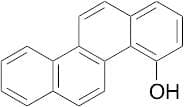
Chrysen-4-ol, with the CAS number 63019-40-9, is a polycyclic aromatic compound characterized by a fused ring structure that includes four benzene rings. This compound features a hydroxyl (-OH) group at the 4-position of the chrysenic framework, which influences its chemical reactivity and solubility. Chrysen-4-ol is typically a solid at room temperature and exhibits properties common to aromatic compounds, such as stability and potential for undergoing electrophilic substitution reactions. The presence of the hydroxyl group enhances its polarity compared to its parent compound, chrysene, which can affect its interactions in biological systems and its solubility in various solvents. Chrysen-4-ol may also exhibit fluorescence, making it of interest in materials science and organic electronics. Additionally, like many polycyclic aromatic compounds, it may have implications in environmental chemistry and toxicology, necessitating careful handling and assessment of its potential effects on health and the environment.
Formula:C18H12O
InChI:InChI=1/C18H12O/c19-17-7-3-5-13-9-10-15-14-6-2-1-4-12(14)8-11-16(15)18(13)17/h1-11,19H
InChI key:InChIKey=CZCGRCFUEPALNV-UHFFFAOYSA-N
SMILES:OC1=C2C3=C(C=4C(C=C3)=CC=CC4)C=CC2=CC=C1
Synonyms:- 4-Chrysenol
- 4-Hydroxychrysene
- Chrysen-4-ol
Sort by
Purity (%)
0
100
|
0
|
50
|
90
|
95
|
100
Found 3 products.
4-Hydroxychrysene
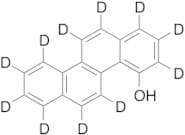
CAS:Controlled ProductFormula:C18H12OColor and Shape:Light Brown To BrownMolecular weight:244.294-Hydroxychrysene-d11
CAS:Controlled ProductFormula:C18D11HOColor and Shape:NeatMolecular weight:255.3554-Hydroxychrysene
CAS:4-Hydroxychrysene is a hydrocarbon that is found in coal tar and petroleum products. It has been shown to be a carcinogen in animals, causing lung cancer when inhaled. 4-Hydroxychrysene also causes DNA damage, chromosomal aberrations, as well as mutations. The aromatic ring of the molecule is susceptible to hydroxylation, leading to the formation of other compounds such as 2-hydroxychrysene and 3-hydroxychrysene. These compounds are also known to be carcinogenic. 4-Hydroxychrysene can also cause tumors in rats by forming adducts with DNA and proteins. 4-Hydroxychrysene emissions have been shown to cause DNA damage in cells from rat liver microsomes and mammalian cells.Formula:C18H12OPurity:Min. 95%Molecular weight:244.3 g/mol