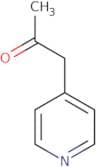
CAS 6304-16-1
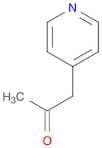
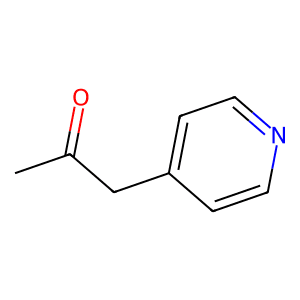
:4-Pyridylacetone
Description:
4-Pyridylacetone, with the CAS number 6304-16-1, is an organic compound characterized by its pyridine ring and an acetone functional group. It typically appears as a yellow to brown liquid or solid, depending on its purity and form. The compound features a pyridine moiety, which contributes to its aromatic properties and potential for hydrogen bonding. 4-Pyridylacetone is known for its ability to chelate metal ions, making it useful in coordination chemistry and as a ligand in various applications. It has a moderate solubility in polar solvents like water and alcohols, while being less soluble in non-polar solvents. The compound exhibits a range of chemical reactivity, including potential for oxidation and substitution reactions. Its applications span across fields such as pharmaceuticals, where it may serve as an intermediate in the synthesis of various bioactive compounds, and in materials science for the development of functional materials. Safety precautions should be taken when handling this compound, as it may pose health risks upon exposure.
Formula:C8H9NO
InChI:InChI=1/C8H9NO/c1-7(10)6-8-2-4-9-5-3-8/h2-5H,6H2,1H3
InChI key:InChIKey=ILRVKOYYFFNXDB-UHFFFAOYSA-N
SMILES:C(C(C)=O)C=1C=CN=CC1
Synonyms:- 1-(4-Pyridinyl)-2-propanone
- 1-(4-Pyridyl)-2-acetone
- 1-(4-Pyridyl)-2-propanone
- 1-(4-Pyridyl)acetone
- 1-(Pyridin-4-Yl)Propan-2-One
- 1-(Pyridin-4-yl)acetone
- 2-Propanone, (4-pyridyl)-
- 2-Propanone, 1-(4-pyridinyl)-
- 2-Propanone, 1-(4-pyridyl)-
- 4-(2-Oxopropyl)pyridine
- 4-Acetonylpyridine
- 4-Pyridinylacetone
- 4-Pyridylacetone
- Methyl 4-pyridylmethyl ketone
- NSC 42613
- 4-Pyridyl acetone
- (4-PYRIDINEYL)-ACETONE
- 1-(4-Pyridinyl)-2-propanone CAS:
- 4-Pyridinolacetone
- (PYRIDIN-4-YL)ACETONE
- See more synonyms
Sort by
Purity (%)
0
100
|
0
|
50
|
90
|
95
|
100
Found 7 products.
(Pyridin-4-yl)acetone
CAS:(Pyridin-4-yl)acetoneFormula:C8H9NOPurity:98%Color and Shape: clear. dark orange liquidMolecular weight:135.16316g/mol(4-Pyridyl)acetone
CAS:(4-Pyridyl)acetone is a pyridine derivative widely used in biochemical experiments and drug synthesis research.
Formula:C8H9NOPurity:98.22%Color and Shape:SolidMolecular weight:135.16(4-Pyridyl)acetone
CAS:Controlled ProductApplications (4-Pyridyl)acetone is a reactant in the synthesis of Milrinone (M344680), a selective phosphodiesterase inhibitor with vasodilating and positive inotropic activity. Cardiotonic.
References Singh, B.: Heterocycles, 23, 1479 (1985); Alousi, A.A., et al.: J. Cardiovasc Pharmacol., 5, 792 (1983); Maskin, C.S., et al.: Circulation, 67, 1065 (1983); Sinoway, L.S., et al.: J. Am. Coll. Cardiol., 2, 327 (1983); Baim, D.S., et al.: N. Engl. J. Med., 309, 748 (1983)Formula:C8H9NOColor and Shape:NeatMolecular weight:135.16(4-Pyridyl)acetone
CAS:4-Pyridylacetone (4PA) is a chloride channel blocker that blocks the ion channels in muscle cells, leading to decreased levels of chloride ions. This leads to the inhibition of the release of pro-inflammatory cytokines and therefore has potential as a treatment for inflammatory diseases such as congestive heart failure, chronic obstructive pulmonary disease, and atherosclerosis. 4PA also inhibits the activation of macrophages by LPS, which may be beneficial in treating autoimmune disorders. Molecular docking analysis has shown that 4PA can bind to aminomalonamide, a drug used to treat myeloma cancer, suggesting that it could be used as an alternative treatment.Formula:C8H9NOPurity:Min. 98 Area-%Color and Shape:Colorless Yellow Clear LiquidMolecular weight:135.16 g/mol