CAS 6304-89-8
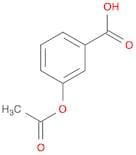
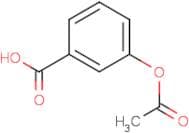
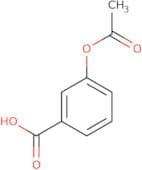
:3-(Acetyloxy)benzoic acid
Description:
3-(Acetyloxy)benzoic acid, also known as acetylsalicylic acid or more commonly as aspirin, is a colorless to white crystalline powder. It is classified as a non-steroidal anti-inflammatory drug (NSAID) and is widely used for its analgesic, antipyretic, and anti-inflammatory properties. The molecular formula of this compound is C9H8O4, and it features an acetyl group attached to the hydroxyl group of salicylic acid, which enhances its therapeutic efficacy and stability. The compound is soluble in organic solvents like ethanol and acetone but has limited solubility in water. Its mechanism of action primarily involves the inhibition of cyclooxygenase enzymes, leading to a decrease in the synthesis of prostaglandins, which are mediators of pain and inflammation. Additionally, aspirin is known for its antiplatelet effects, making it useful in cardiovascular disease prevention. However, it can cause gastrointestinal irritation and should be used with caution in certain populations. Overall, 3-(Acetyloxy)benzoic acid is a significant compound in both medicinal chemistry and pharmacology.
Formula:C9H8O4
InChI:InChI=1S/C9H8O4/c1-6(10)13-8-4-2-3-7(5-8)9(11)12/h2-5H,1H3,(H,11,12)
InChI key:InChIKey=NGMYCWFGNSXLMP-UHFFFAOYSA-N
SMILES:O(C(C)=O)C1=CC(C(O)=O)=CC=C1
Synonyms:- 3-(Acetyloxy)Benzoic Acid
- 3-acetoxybenzoic Acid
- Benzoic acid, 3-(acetyloxy)-
- Benzoic acid, m-hydroxy-, acetate
- NSC 43147
- m-Acetoxybenzoic acid
- m-Carboxyphenyl acetate
Sort by
Purity (%)
0
100
|
0
|
50
|
90
|
95
|
100
Found 4 products.
3-Acetoxybenzoic acid
CAS:3-Acetoxybenzoic acid is a metabolite of 3-hydroxybenzoic acid, which is an intermediate in the biosynthesis of salicylic acid. It has been shown to have antibacterial properties and may be used as a topical treatment for skin infections caused by staphylococcus. 3-Acetoxybenzoic acid also has antiviral properties, which may be related to its ability to bind histone H3. 3-Acetoxybenzoic acid inhibits leishmania infantum growth and development by binding to chloride ions and preventing the formation of hydrogen bonds in the cell membrane. This prevents chloride ions from entering the cell and causes water channels to close, leading to dehydration and death.Formula:C9H8O4Purity:Min. 95%Color and Shape:PowderMolecular weight:180.16 g/mol