CAS 630422-89-8
:Isoquinoline, 1-chloro-7-fluoro-
Description:
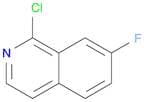
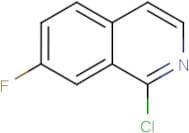
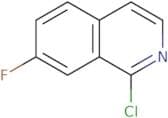
Isoquinoline, 1-chloro-7-fluoro- is a heterocyclic organic compound characterized by its isoquinoline backbone, which consists of a fused benzene and pyridine ring structure. The presence of a chlorine atom at the first position and a fluorine atom at the seventh position of the isoquinoline ring significantly influences its chemical properties and reactivity. This compound is typically a colorless to pale yellow liquid or solid, depending on its physical state at room temperature. It is known for its potential applications in medicinal chemistry, particularly in the development of pharmaceuticals, due to the presence of halogen substituents that can enhance biological activity and modulate pharmacokinetic properties. Isoquinoline derivatives often exhibit a range of biological activities, including antimicrobial, anti-inflammatory, and anticancer properties. Additionally, the compound's solubility and stability can vary based on the solvent and environmental conditions, making it important for researchers to consider these factors in practical applications. Safety data should also be reviewed, as halogenated compounds can pose specific health and environmental risks.
Formula:C9H5ClFN
Sort by
Purity (%)
0
100
|
0
|
50
|
90
|
95
|
100
Found 4 products.
1-Chloro-7-fluoroisoquinoline
CAS:Formula:C9H5ClFNPurity:98%Color and Shape:SolidMolecular weight:181.59411-Chloro-7-fluoroisoquinoline
CAS:1-Chloro-7-fluoroisoquinolineFormula:C9H5ClFNPurity:≥95%Color and Shape: white solidMolecular weight:181.59g/mol1-CHLORO-7-FLUOROISOQUINOLINE
CAS:Formula:C9H5ClFNPurity:97%Color and Shape:Solid, Yellow to light brown powderMolecular weight:181.591-Chloro-7-fluoroisoquinoline
CAS:1-Chloro-7-fluoroisoquinoline is a cytotoxic agent that inhibits the growth of cancer cells by binding to the ubiquitin ligase E3, which targets the tumor suppressor protein p53 for destruction. It has been shown to inhibit the growth of lung cancer cells, as well as other cancers that have mutant versions of epidermal growth factor receptors (EGFR). 1-Chloro-7-fluoroisoquinoline binds to a specific region on EGFR that is not present in normal EGFR and prevents receptor activation. The phenyl group in 1-chloro-7-fluoroisoquinoline may be important for its ability to bind to ubiquitin ligases.Formula:C9H5ClFNPurity:Min. 95%Molecular weight:181.59 g/mol