CAS 6305-43-7
:1,4-Dibromo-2,3-butanedione
Description:
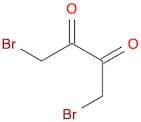
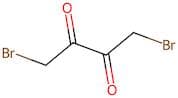
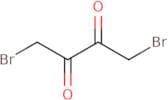
1,4-Dibromo-2,3-butanedione, with the CAS number 6305-43-7, is an organic compound characterized by its diketone structure, featuring two bromine atoms attached to the 1 and 4 positions of a butanedione backbone. This compound typically appears as a yellow to brown solid and is known for its reactivity due to the presence of the carbonyl groups, which can participate in various chemical reactions, including nucleophilic additions and condensation reactions. Its bromine substituents enhance its electrophilic character, making it useful in synthetic organic chemistry, particularly in the synthesis of more complex molecules. The compound is soluble in organic solvents but has limited solubility in water. Safety considerations are important when handling this substance, as it may pose health risks, including potential toxicity and environmental hazards. Proper laboratory practices should be followed to mitigate exposure. Overall, 1,4-Dibromo-2,3-butanedione serves as a valuable intermediate in chemical synthesis and research applications.
Formula:C4H4Br2O2
InChI:InChI=1S/C4H4Br2O2/c5-1-3(7)4(8)2-6/h1-2H2
InChI key:InChIKey=RZMOICJDRADLCT-UHFFFAOYSA-N
SMILES:C(C(CBr)=O)(CBr)=O
Synonyms:- 1,4-Dibromo-2,3-butanedione, (1,4-Dibromodiacetyl)
- 1,4-Dibromobutane-2,3-Dione
- 2,3-Butanedione, 1,4-dibromo-
- NSC 41130
- NSC 75722
- alpha,alpha-Dibromobiacetyl~1,4-Dibromodiacetyl
- 1,4-Dibromo-2,3-butanedione
Sort by
Purity (%)
0
100
|
0
|
50
|
90
|
95
|
100
Found 4 products.
1,4-DIBROMO-2,3-BUTANEDIONE
CAS:Formula:C4H4Br2O2Purity:98%Color and Shape:SolidMolecular weight:243.88141,4-Dibromo-2,3-butanedione
CAS:1,4-Dibromo-2,3-butanedione is an organic compound that is used as a model organism in organic chemistry. It is reactive with light and can emit light when it reacts with oxygen. 1,4-Dibromo-2,3-butanedione has been studied for its use in the synthesis of adenine nucleotides and amino acids. This chemical also has reactive functional groups that can be used to synthesize other molecules. The chlorine atom present in the molecule makes it reactive with many other compounds. 1,4-Dibromo-2,3-butanedione is not found naturally but can be synthesized from dehydroabietic acid through a series of steps involving oxidation and reduction reactions.Formula:C4H4Br2O2Purity:Min. 95%Color and Shape:PowderMolecular weight:243.88 g/mol1,4-Dibromobutane-2,3-dione
CAS:Formula:C4H4Br2O2Purity:98%Color and Shape:SolidMolecular weight:243.882