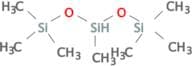
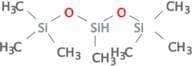
CAS 63148-57-2
:Polymethylhydrosiloxane
- Abil OSW 5
- Akophob SN
- Alkasil MH 1667
- Blue Star 202
- Bluesil 269
- Bluesil 628V12H3.5
- Bluesil Emulsion 269
- Bluesil WR 68
- Bs 4004
- By 11-003
- By 22-861
- C 25B
- Dx 1202-60
- Dy-H 212-40
- F 1-3546
- Fz 3702
- Hmq 30
- Hv 70
- Kf 99-20Cs
- Khs 202A
- Lightsilicone P 290E
- Lightsilicone P 316
- Lighttex S 011
- Lukooil H
- Ly-H 075
- Me hydrogen silicones
- Me hydrogen siloxanes
- Me hydrogen trimethylsilyl-terminated polysiloxanes
- Methyl Hydrogen Silicone Fluid
- Methyl hydro-silicone oil
- Methyl hydrogen polysiloxane
- Methylhydro-silicone oil
- Mh 30
- Momentive SS 4300
- Mq 103
- Mqh 7
- NH 30 (siloxane)
- NR-B (siloxane)
- Nh 2101
- Nh 30
- Nh 31
- Nh 32
- Ns 5802
- Ns 5805
- NuSil MED 6345B
- Org 202
- Pmhs
- Poly(dimethylsiloxane-co-methylhydrosiloxane)
- Poly(methylhydrosiloxane)
- Polymethylhydrosiloxane, Trimethylsiloxy Terminated
- Polysiloxanes, Me hydrogen
- Q 2-5057S
- Q 2-5567S
- RD 1 (crosslinker)
- Rhodorsil RTV 141B
- Rtv 141B
- Sb 04
- Sda 3211
- Sda 3211-2
- Sf 6000P
- Sf 6001P
- Sf 6004P
- Sh 1007
- Sh 2002
- Sh 21
- Si 202
- Si 4087
- Silastic RD 1
- Silikon HV 70
- Siloprene U 430
- Siloxanes and Silicones, Me hydrogen
- Silres BS 1042
- Silres BS 4004
- Silres SY 816VP
- Siltex 02
- Sm 8707Ex
- Spbd 81943
- Spbd 88017
- Ss 4300
- Tegiloxan PTF 16
- Tegopren 6846
- Tegosivil LHZ
- Tegosivin T 110
- Thp 11A
- Trimethylsiloxy terminatedpolymethyhydrosiloxane
- Ts-D 120
- Tsf 484Ex
- Tsw 83
- U 430
- Ultratex EA
- Ultratex EW
- V 93 (siloxane)
- Ws 60E
- X 21-5953
- X 40-2664F
- Xf 40A6098
- Xhg 202
- Xhg 202-100
- Xl 321
- Methylhydro-siliconeoil
- POLYMETHYLHYDROSILOXANE: VISCOSITY 85 CST.
- POLYMETHYLHYDROSILOXANE, TRIMETHYLSILYL TERMINATED, 30-45 cSt
- POLYMETHYLHYDROSILOXANE, TRIMETHYLSILYL TERMINATED, 24-30 cSt
- POLYMETHYLHYDROSILOXANE, TRIMETHYLSILYL TERMINATED, 25-35cs
- Methylhydrogensiloxane Dimethylsiloxane Copolymer
- Poly(Methylhydrosiloxane), 15-40 cps
- Hydrosilicone oil
- Hydrogen silicone oil
- Poly(Methylhydrosiloxane) viscosity 15-40 MPa.s (20 C)
- Polymethyldrosiloxane
- DK-H202 methyl silicone oil
- Methylhydrogensiloxane polymer, PMHS
- Poly(methylhydrosiloxane-co-dimethylsiloxane)
- siloxanesandsilicones,methylhydrogen
- polymethylhydrosiloxane, trimethylsilyl terminated, 20-35 cst
- PolyMethylHydrosiloxanes,Trimethylsiloxyterminated
- methylhydrogensiloxane polymer
- Poly(Methylhydrosiloxane) average Mn 1,700-3,200
- DOW CORNING 1107 WATER REPELLENT AND POWDER TREATMENT
- POLYMETHYLHYDROSILOXANE, VISCOSITY 35-45 CST.
- Poly(Methylhydrosiloxane), triMethylsilyl terMinated average Mn ~390
- PolyMethylhydrosiloxane, viscosity 30-45 cSt.
- Poly(methylhydrosiloxane),Methylhydrogensiloxane polymer, PMHS
- siloxanesandsilicones,mehydrogen
- POLYMETHYLHYDROSILOXANE, TRIMETHYLSILYL TERMINATED, 15-25cs
- PolyMethylhydrosiloxane, viscosity 15-29 cSt.
- POLY(METHYLHYDROSILOXANE), TRIMETHYLSILY
- polymethylhydrosiloxane, trimethylsilyl terminated, 15-25 cst
- Polymethylhydrosiloxane, viscosity 25-35 cSt.
- POLYMETHYLHYDROSILOXANE, VISCOSITY 15-25 CST.
- POLYMETHYLHYDROSILOXANE, TRIMETHYLSILYL TERMINATED, 35-45cs
- Poly(methylhydrosiloxane-co-dimethylsiloxane), trimethylsilyl terminated
- VISCOSITY 85 CST.
- Methyl H polysiloxane
- POLYMETHYLHYDROSILOXANE, TRIMETHYLSILYL TERMINATED, 15-29 cSt
- See more synonyms
Poly(methylhydrosiloxane)
CAS:Poly(methylhydrosiloxane) is used in the reduction of esters to alcohols, catalyzed by a combination of titanocene dichloride and either n-BuLi or EtMgBr. It is a safer alternative to triethoxysilane, B22063, for reduction of phosphine oxides to phosphines, catalyzed by Ti(O-i-Pr)4. It is also usedFormula:(CH4OSi)nColor and Shape:Clear colorless, LiquidMolecular weight:ca 1900Polymethylhydrosiloxanes, trimethlysiloxy terminated 24-30cSt
CAS:HMS-992 - Polymethylhydrosiloxanes, trimethlysiloxy terminated 24-30cSt
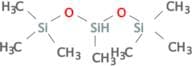
Formula:(CH4Si)nC6H18O2Si2Purity:= 99% (GC)Color and Shape:Liquid, ClearMolecular weight:1800-2100Poly(methyl hydrogen siloxane)
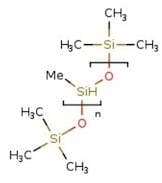
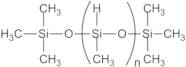
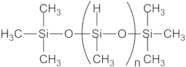
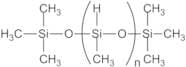
CAS:Controlled ProductFormula:(CH3)3SiO(CH3)HSiOnSi(CH3)3Color and Shape:NeatPoly(methylhydrosiloxane)
CAS:Polymethylhydrosiloxane is a polymer that is used in coatings and adhesives. It has been shown to be an efficient aid for removing copper chloride from water and can be applied to the treatment of calcium carbonate sludge. Poly(methylhydrosiloxane) also has high affinity for fatty esters, which is important for its use as a mass analyzer in environmental pollution studies. This polymer has been shown to have excellent kinetic and optical properties, making it a good candidate for electrochemical studies.Color and Shape:Colorless Clear LiquidPOLYMETHYLHYDROSILOXANE, TRIMETHYLSILYL TERMINATED, 20-35 cSt
CAS:Siloxane-Based Silane Reducing Agent
Organosilanes are hydrocarbon-like and possess the ability to serve as both ionic and free-radical reducing agents. These reagents and their reaction by-products are safer and more easily handled and disposed than many other reducing agents. The metallic nature of silicon and its low electronegativity relative to hydrogen lead to polarization of the Si-H bond yielding a hydridic hydrogen and a milder reducing agent compared to aluminum-, boron-, and other metal-based hydrides. A summary of some key silane reductions are presented in Table 1 of the Silicon-Based Reducing Agents brochure.
Pendant Functional Fluid; polyMethylHydrosiloxanes, TMS Terminated
MethylHydrosiloxane homopolymers are used as water-proofing agents, reducing agents and as components in some foamed silicone systems.
Poly(methylhydrosiloxane); Methyl hydrogen siloxane; Polysiloxanes, methyl hydrogen; Siloxanes and silicones, methyl hydrogen
Viscosity: 20-35 cStMolecular Weight: 1,800-2,100 g/molMol% Hydride: 100Reduces lactones to lactolsReduces aldehydes, ketones, esters, lactones, triglycerides and epoxides to alcohols with zinc hydride catalysisWith titanium tetraisopropoxide catalysis carries out reductive amination of ketones and aldehydes and the reduction of acids or esters to 1° alcoholsWith TBAF catalysis selectively reduces aldehydes over ketonesUsed to generate tri-n-butyltin hydride ‘in-situ’ and in a one-pot hydrostannylation/Stille coupling sequenceReduces esters to alcoholsExtensive review of silicon based reducing agents: Larson, G.; Fry, J. L. "Ionic and Organometallic-Catalyzed Organosilane Reductions", Wipf, P., Ed.; Wiley, 2007Color and Shape:LiquidMolecular weight:1800-2100POLYMETHYLHYDROSILOXANE, TRIMETHYLSILYL TERMINATED, 30-45 cSt
CAS:Siloxane-Based Silane Reducing Agent
Organosilanes are hydrocarbon-like and possess the ability to serve as both ionic and free-radical reducing agents. These reagents and their reaction by-products are safer and more easily handled and disposed than many other reducing agents. The metallic nature of silicon and its low electronegativity relative to hydrogen lead to polarization of the Si-H bond yielding a hydridic hydrogen and a milder reducing agent compared to aluminum-, boron-, and other metal-based hydrides. A summary of some key silane reductions are presented in Table 1 of the Silicon-Based Reducing Agents brochure.
Pendant Functional Fluid; polyMethylHydrosiloxanes, TMS Terminated
MethylHydrosiloxane homopolymers are used as water-proofing agents, reducing agents and as components in some foamed silicone systems.
Poly(methylhydrosiloxane); Methyl hydrogen siloxane; Polysiloxanes, methyl hydrogen; Siloxanes and silicones, methyl hydrogen
Viscosity: 30-45 cStMolecular Weight: 2,100-2,400 g/molMol% Hydride: 100Reduces lactones to lactolsReduces aldehydes, ketones, esters, lactones, triglycerides and epoxides to alcohols with zinc hydride catalysisWith titanium tetraisopropoxide catalysis carries out reductive amination of ketones and aldehydes and the reduction of acids or esters to 1° alcoholsWith TBAF catalysis selectively reduces aldehydes over ketonesUsed to generate tri-n-butyltin hydride ‘in-situ’ and in a one-pot hydrostannylation/Stille coupling sequenceReduces esters to alcoholsExtensive review of silicon based reducing agents: Larson, G.; Fry, J. L. "Ionic and Organometallic-Catalyzed Organosilane Reductions", Wipf, P., Ed.; Wiley, 2007Color and Shape:LiquidMolecular weight:2100-2400POLYMETHYLHYDROSILOXANE, TRIMETHYLSILYL TERMINATED, 15-25 cSt
CAS:Siloxane-Based Silane Reducing Agent
Organosilanes are hydrocarbon-like and possess the ability to serve as both ionic and free-radical reducing agents. These reagents and their reaction by-products are safer and more easily handled and disposed than many other reducing agents. The metallic nature of silicon and its low electronegativity relative to hydrogen lead to polarization of the Si-H bond yielding a hydridic hydrogen and a milder reducing agent compared to aluminum-, boron-, and other metal-based hydrides. A summary of some key silane reductions are presented in Table 1 of the Silicon-Based Reducing Agents brochure.
Pendant Functional Fluid; polyMethylHydrosiloxanes, TMS Terminated
MethylHydrosiloxane homopolymers are used as water-proofing agents, reducing agents and as components in some foamed silicone systems.
Poly(methylhydrosiloxane); Methyl hydrogen siloxane; Polysiloxanes, methyl hydrogen; Siloxanes and silicones, methyl hydrogen
Viscosity: 15-25 cStMolecular Weight: 1,400-1,800 g/molMol% Hydride: 100Reduces lactones to lactolsReduces aldehydes, ketones, esters, lactones, triglycerides and epoxides to alcohols with zinc hydride catalysisWith titanium tetraisopropoxide catalysis carries out reductive amination of ketones and aldehydes and the reduction of acids or esters to 1° alcoholsWith TBAF catalysis selectively reduces aldehydes over ketonesUsed to generate tri-n-butyltin hydride ‘in-situ’ and in a one-pot hydrostannylation/Stille coupling sequenceReduces esters to alcoholsExtensive review of silicon based reducing agents: Larson, G.; Fry, J. L. "Ionic and Organometallic-Catalyzed Organosilane Reductions", Wipf, P., Ed.; Wiley, 2007Color and Shape:LiquidMolecular weight:1400-1800Polymethylhydrosiloxanes, trimethlysiloxy terminated 15-25cSt
CAS:HMS-991 - Polymethylhydrosiloxanes, trimethlysiloxy terminated 15-25cSt
Formula:(CH4Si)nC6H18O2Si2Purity:= 99% (GC)Color and Shape:Liquid, ClearMolecular weight:1400-1800Polymethylhydrosiloxanes, trimethlysiloxy terminated 30-45cSt
CAS:Formula:(CH4Si)nC6H18O2Si2Purity:= 99% (GC)Color and Shape:Liquid, ClearMolecular weight:0.0