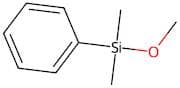
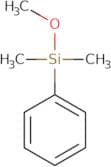
CAS 63148-58-3
:Polysiloxanes, Me Ph
Description:
Polysiloxanes, commonly referred to as silicone polymers, are a class of synthetic compounds characterized by a backbone of alternating silicon and oxygen atoms, with organic groups attached to the silicon. The specific compound identified by the CAS number 63148-58-3 is a type of polysiloxane that contains methyl (Me) and phenyl (Ph) groups. This combination imparts unique properties, such as enhanced thermal stability, flexibility, and resistance to moisture and chemicals. Polysiloxanes with phenyl groups exhibit improved optical clarity and lower surface tension, making them suitable for applications in coatings, adhesives, and sealants. Additionally, they are often used in personal care products due to their skin-friendly properties. The presence of both methyl and phenyl groups allows for tunable physical and chemical properties, making these materials versatile for various industrial and consumer applications. Overall, polysiloxanes are valued for their durability, low toxicity, and ability to withstand extreme temperatures, contributing to their widespread use in diverse fields.
Formula:Unspecified
InChI:InChI=1/C11H16OSi/c1-10-6-2-3-7-11(10)13-9-5-4-8-12-13/h2-3,6-7,13H,4-5,8-9H2,1H3
SMILES:Cc1ccccc1[SiH]1CCCCO1
Synonyms:- 2-(2-Methylphenyl)-1,2-Oxasilinane
- 3R350
- 3W220
- Methylphenylpolysiloxanes
- Polymethylphenylsiloxanes
- Siloxanes and Silicones, Me Ph
- KO 08K
- Polysiloxanes, Me Ph
- OV 22
- SR 82
Sort by
The purity filter is not visible because current products do not have associated purity data for filtering.
Found 3 products.
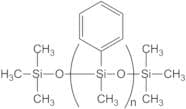
Poly(methylphenylsiloxane)
CAS:Poly(methylphenylsiloxane) is a polymer that can be synthesized in a number of ways, but the most common method involves the use of an initiator to start the process. This polymerization process begins by adding a phenyl group (a hydrocarbon molecule consisting of a benzene ring with two hydrogens and one or more hydroxyl groups) to a siloxane chain, which is made up of alternating silicon and oxygen atoms. The structure is then extended by adding more phenyl groups in order to build the desired polymer. Poly(methylphenylsiloxane) has been shown to have an activation energy of 22.0 kJ/mol, as determined by electrochemical impedance spectroscopy. It also has optical properties that depend on its molecular weight, with low-molecular weight polymers being transparent while higher-molecular weight polymers become translucent or opaque.Formula:(C7H8OSi)nColor and Shape:Clear Liquid