CAS 6320-63-4
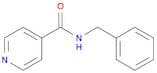
:N-benzylpyridine-4-carboxamide
Description:
N-benzylpyridine-4-carboxamide, with the CAS number 6320-63-4, is an organic compound characterized by its structural features, which include a pyridine ring substituted with a benzyl group and a carboxamide functional group. This compound typically exhibits properties associated with both aromatic and amide functionalities, such as moderate solubility in polar solvents and potential interactions through hydrogen bonding due to the amide group. The presence of the pyridine ring contributes to its basicity and potential reactivity in various chemical reactions, including nucleophilic substitutions and electrophilic aromatic substitutions. N-benzylpyridine-4-carboxamide may also display biological activity, making it of interest in medicinal chemistry and drug development. Its stability and reactivity can be influenced by the electronic effects of the substituents on the pyridine ring and the benzyl group. Overall, this compound serves as a valuable building block in organic synthesis and may have applications in pharmaceuticals and agrochemicals.
Formula:C13H12N2O
InChI:InChI=1/C13H12N2O/c16-13(12-6-8-14-9-7-12)15-10-11-4-2-1-3-5-11/h1-9H,10H2,(H,15,16)
SMILES:c1ccc(cc1)CNC(=O)c1ccncc1
Synonyms:- 4-pyridinecarboxamide, N-(phenylmethyl)-
- Isonicotinic Acid Benzylamide
- N-Benzylisonicotinamide
Sort by
Purity (%)
0
100
|
0
|
50
|
90
|
95
|
100
Found 4 products.
N-Benzylisonicotinamide
CAS:Formula:C13H12N2OPurity:95%Color and Shape:SolidMolecular weight:212.2472N-Benzylpyridine-4-carboxamide
CAS:N-Benzylpyridine-4-carboxamide is a synthetic compound that has been shown to have anticancer, anti-inflammatory, and neuropathic properties. This compound is an innovative drug candidate for the treatment of inflammatory diseases and cancer. N-Benzylpyridine-4-carboxamide inhibits the production of chemokines, which are cytokines that are involved in the recruitment of cells to sites of inflammation and infection. The mechanism involves the ring opening of the amide bond between the nitro group and the carboxylic acid group. The pharmacophore is derived from this ring opening reaction. This compound also blocks receptor subtypes such as 5HT3A or NMDA receptors, which may lead to neuropathic effects.
Formula:C13H12N2OPurity:Min. 95%Molecular weight:212.25 g/mol