CAS 6320-96-3
:Bromopropionamide; 98%
Description:
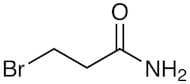
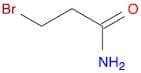
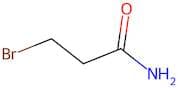
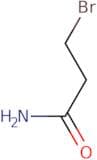
Bromopropionamide, with the CAS number 6320-96-3, is an organic compound characterized by the presence of a bromine atom attached to a propionamide structure. It typically appears as a white to off-white solid and is soluble in polar solvents such as water and alcohols. This compound is known for its reactivity due to the presence of the bromine atom, which can participate in nucleophilic substitution reactions. Bromopropionamide is often utilized in organic synthesis, particularly in the preparation of various pharmaceuticals and agrochemicals. Its molecular structure includes a propionamide functional group, which contributes to its properties as a potential building block in chemical reactions. Safety precautions are necessary when handling this compound, as it may pose health risks if inhaled, ingested, or in contact with skin. Proper storage in a cool, dry place away from incompatible substances is recommended to maintain its stability and efficacy.
Formula:C3H6BrNO
InChI:InChI=1/C3H6BrNO/c4-2-1-3(5)6/h1-2H2,(H2,5,6)
SMILES:C(CBr)C(=N)O
Synonyms:- 3-Bromopropionamide
- 3-Bromopropanamide
Sort by
Purity (%)
0
100
|
0
|
50
|
90
|
95
|
100
Found 5 products.
3-Bromopropionamide
CAS:Formula:C3H6BrNOPurity:>98.0%(T)Color and Shape:White to Almost white powder to crystalMolecular weight:151.993-Bromopropionamide
CAS:3-BromopropionamideFormula:C3H6BrNOPurity:98%Color and Shape: white solidMolecular weight:151.99g/mol3-Bromopropionamide
CAS:3-Bromopropionamide is an antibacterial agent that inhibits bacterial growth by blocking the synthesis of proteins. It is a synthetic amide with significant antibacterial activity against S. aureus. 3-Bromopropionamide has been shown to be effective against drug-resistant bacteria, including those that are resistant to metalloid salts or alkylene compounds. This substance also has psychomimetic effects and may be useful for studying the kinetics of protein synthesis in cells. 3-Bromopropionamide can be used as a linker to attach other molecules to proteins, which could allow them to penetrate cell membranes more easily.Formula:C3H6ONBrPurity:Min. 95%Color and Shape:PowderMolecular weight:151.99 g/mol