CAS 6323-14-4
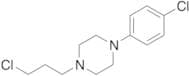
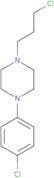
:1-(4-chlorophenyl)-4-(3-chloropropyl)piperazine
Description:
1-(4-Chlorophenyl)-4-(3-chloropropyl)piperazine, with the CAS number 6323-14-4, is a chemical compound that belongs to the piperazine class of compounds. It features a piperazine ring, which is a six-membered cyclic amine, substituted with a 4-chlorophenyl group and a 3-chloropropyl group. This structure contributes to its potential biological activity, particularly in the realm of pharmacology, where piperazine derivatives are often explored for their effects on the central nervous system. The presence of chlorine atoms in the phenyl and propyl substituents can influence the compound's lipophilicity, solubility, and overall reactivity. Typically, compounds like this may exhibit properties such as moderate to high stability under standard conditions, but their reactivity can vary based on the specific functional groups present. Additionally, the compound may have implications in medicinal chemistry, particularly in the development of therapeutic agents, due to its structural characteristics that can interact with various biological targets.
Formula:C13H18Cl2N2
InChI:InChI=1/C13H18Cl2N2/c14-6-1-7-16-8-10-17(11-9-16)13-4-2-12(15)3-5-13/h2-5H,1,6-11H2
SMILES:C(CCl)CN1CCN(CC1)c1ccc(cc1)Cl
Sort by
Purity (%)
0
100
|
0
|
50
|
90
|
95
|
100
Found 4 products.
1-(4-Chlorophenyl)-4-(3-chloropropyl)piperazine
CAS:Controlled ProductFormula:C13H18Cl2N2Color and Shape:NeatMolecular weight:273.2011-(4-Chlorophenyl)-4-(3-chloropropyl)piperazine
CAS:Controlled Product4-Chlorophenyl-1-(3-chloropropyl)piperazine dihydrochloride (PCPP) is a drug that is used in the treatment of Parkinson's disease. It has been shown to be an effective replacement for levodopa, which is the most common treatment for Parkinson's disease and other dopamine-related disorders. PCPP does not have any effect on the levels of dopamine or other neurotransmitters in the brain, but it does inhibit the enzymes that break down dopamine and other neurotransmitters. As a result, PCPP prevents or reduces symptoms of Parkinson's disease and other dopamine-related disorders.Formula:C13H18Cl2N2Purity:Min. 95%Molecular weight:273.2 g/mol