CymitQuimica logo

CAS 6332-28-1

:

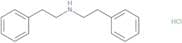
2-phenyl-N-(2-phenylethyl)ethanamine

Description:
2-Phenyl-N-(2-phenylethyl)ethanamine, also known by its CAS number 6332-28-1, is an organic compound that belongs to the class of amines. This substance features a central ethanamine structure with two phenyl groups attached, which contributes to its aromatic characteristics. The presence of these phenyl groups enhances its lipophilicity, potentially influencing its solubility in organic solvents rather than in water. The compound may exhibit biological activity due to its amine functional group, which can participate in hydrogen bonding and interact with various biological targets. Its structural configuration suggests potential applications in medicinal chemistry, particularly in the development of pharmaceuticals or as a precursor in organic synthesis. Additionally, the compound's stability and reactivity can be influenced by the steric and electronic effects of the phenyl substituents. Overall, 2-phenyl-N-(2-phenylethyl)ethanamine is a notable compound in the realm of organic chemistry, with implications for both research and application in various chemical fields.
Formula:C16H19N
InChI:InChI=1/C16H19N/c1-3-7-15(8-4-1)11-13-17-14-12-16-9-5-2-6-10-16/h1-10,17H,11-14H2
SMILES:c1ccc(cc1)CCNCCc1ccccc1
Synonyms:
  • Benzeneethanamine, N- (2-phenylethyl)-
  • Bis(2-phenylethyl)amine
  • Diphenethylamine
  • Diphenethyl-amine
Sort by

Purity (%)
0
100
|
0
|
50
|
90
|
95
|
100
Found 1 products.
  • Bis(2-phenylethyl)amine hydrochloride

    CAS:
    <p>Bis(2-phenylethyl)amine hydrochloride (BPEA) is a compound that has been shown to have neuroprotective effects in animal models of Alzheimer's disease. This compound has been found to inhibit the formation of reactive oxygen species, which are responsible for neuronal cell death. BPEA also inhibits the enzyme amine oxidase, which is responsible for the breakdown of neurotransmitters and may be involved in the development of Alzheimer's disease and other neurodegenerative diseases. BPEA has been shown to be effective in preventing and treating symptoms of Alzheimer's disease in an experimental model. Dipropylamine (DPEA), a known inhibitor of amine oxidase, was tested with BPEA and found to have synergistic effects. DPBA was not able to prevent or treat symptoms when given alone.</p>
    Formula:C16H20ClN
    Purity:Min. 95%
    Molecular weight:261.79 g/mol

    Ref: 3D-GAA33228

    5g
    1,410.00€
    500mg
    450.00€