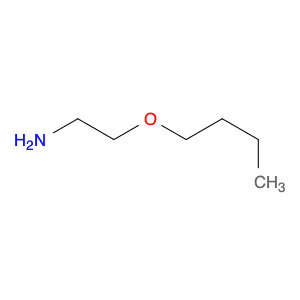
CAS 6338-52-9
:2-Butoxyethanamine
Description:
2-Butoxyethanamine, also known as butyl cellosolve amine, is an organic compound characterized by its amine functional group and ether structure. It features a butoxy group attached to an ethylamine backbone, which contributes to its unique properties. This compound is typically a colorless to pale yellow liquid with a mild odor. It is soluble in water and organic solvents, making it versatile for various applications. 2-Butoxyethanamine is primarily used as an intermediate in the synthesis of surfactants, emulsifiers, and other chemical products. Its amine group allows it to participate in various chemical reactions, including nucleophilic substitutions and coupling reactions. Safety considerations include potential skin and eye irritation, and it should be handled with appropriate protective measures. As with many amines, it may also have implications for environmental and health regulations, necessitating careful management in industrial settings. Overall, 2-butoxyethanamine is a valuable compound in chemical manufacturing and research.
Formula:C6H15NO
InChI:InChI=1S/C6H15NO/c1-2-3-5-8-6-4-7/h2-7H2,1H3
InChI key:InChIKey=BFBKUYFMLNOLOQ-UHFFFAOYSA-N
SMILES:C(OCCN)CCC
Synonyms:- 2-Butoxy-1-aminoethane
- 2-Butoxyethan-1-amine
- 2-Butoxyethanamine
- Ethanamine, 2-butoxy-
- Ethylamine, 2-butoxy-
- NSC 40757
- 2-Butoxyethylamine
Sort by
Purity (%)
0
100
|
0
|
50
|
90
|
95
|
100
Found 2 products.
(2-Butoxyethyl)amine hydrochloride
CAS:Formula:C6H15NOPurity:97%Color and Shape:LiquidMolecular weight:117.18942-Butoxyethan-1-amine
CAS:2-Butoxyethan-1-amine is a solvent that has been used in the production of polydimethylsiloxane, which is often found in silicone sealants and caulks. This chemical is volatilized, so it can be released into the atmosphere during its manufacture or use. The ethers are cross-linked with glycols to form polyether polyols that are heat treated to produce ethylene glycol. 2-Butoxyethan-1-amine is also an ingredient in water solutions of polydimethylsiloxane, which may include other substances such as salts. The permeation of this chemical through microns (µm) thick layers of silica gel was demonstrated using a template containing pores of various sizes and shapes. Fluoride ions were used to catalyze the reaction between 2-butoxyethan-1-amine and silica gel; this process was shown to increase the rate of permeation by up to 40%.Formula:C6H15NOPurity:Min. 95%Color and Shape:Clear LiquidMolecular weight:117.19 g/mol