CAS 63525-48-4
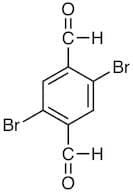
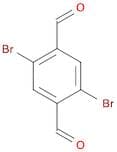
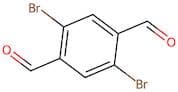
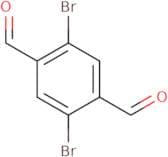
:2,5-dibromoterephthalaldehyde
Description:
2,5-Dibromoterephthalaldehyde is an organic compound characterized by its structure, which features two bromine atoms attached to the aromatic ring of terephthalaldehyde. This compound belongs to the class of aromatic aldehydes and is known for its potential applications in organic synthesis and materials science. The presence of bromine substituents enhances its reactivity, making it useful in various chemical reactions, including cross-coupling and electrophilic aromatic substitution. The aldehyde functional groups contribute to its reactivity, allowing for further derivatization. In terms of physical properties, 2,5-dibromoterephthalaldehyde is typically a solid at room temperature, with solubility in organic solvents such as dichloromethane and ethanol. Its molecular structure may impart specific optical and electronic properties, making it of interest in the development of organic electronic materials. Safety data should be consulted for handling, as brominated compounds can pose health risks. Overall, 2,5-dibromoterephthalaldehyde is a versatile compound with significant implications in synthetic organic chemistry.
Formula:C8H4Br2O2
InChI:InChI=1/C8H4Br2O2/c9-7-1-5(3-11)8(10)2-6(7)4-12/h1-4H
SMILES:c1c(C=O)c(cc(C=O)c1Br)Br
Sort by
Purity (%)
0
100
|
0
|
50
|
90
|
95
|
100
Found 5 products.
2,5-Dibromoterephthalaldehyde
CAS:Formula:C8H4Br2O2Purity:>97.0%(GC)Color and Shape:White to Green to Brown powder to crystalMolecular weight:291.932,5-DIBROMO-1,4-BENZENEDICARBOXALDEHYDE
CAS:Formula:C8H4Br2O2Purity:96%Color and Shape:SolidMolecular weight:291.92422,5-Dibromo-1,4-Benzenedicarboxaldehyde
CAS:2,5-Dibromo-1,4-BenzenedicarboxaldehydePurity:98%Molecular weight:291.92g/mol2,5-Dibromoterephthalaldehyde
CAS:Formula:C8H4Br2O2Purity:95.0%Color and Shape:SolidMolecular weight:291.9262,5-Dibromoterephthalaldehyde
CAS:2,5-Dibromoterephthalaldehyde is a red fluorescent compound that has been shown to have potential as a cancer therapy. The compound is able to bind to the electron acceptor 2,5-dibromoterephthalate (DBT) and can be used in photocatalytic reactions. It has been shown that 2,5-dibromoterephthalaldehyde can cause high levels of cell death in cancer cells with low levels of toxicity to healthy cells. This property may be due to its ability to target cancerous cells by binding with their mitochondria. The compound is also fluorescent and emits light when excited with UV light. 2,5-Dibromoterephthalaldehyde has been shown to form structured metallacycles in the presence of copper ions. !--Formula:C8H4Br2O2Purity:Min. 95%Color and Shape:PowderMolecular weight:291.92 g/mol