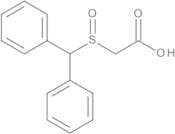
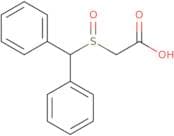
CAS 63547-24-0
:Modafinil acid
Description:
Modafinil acid, with the CAS number 63547-24-0, is a chemical compound that is a derivative of modafinil, a wakefulness-promoting agent commonly used to treat sleep disorders such as narcolepsy and obstructive sleep apnea. The substance is characterized by its ability to enhance cognitive function and alertness, although its specific pharmacological properties may differ from those of modafinil. Modafinil acid is typically a white to off-white solid, and its solubility can vary depending on the solvent used. The compound is of interest in pharmaceutical research, particularly in the context of studying its metabolic pathways and potential therapeutic applications. As with many chemical substances, safety and handling precautions are essential, as modafinil and its derivatives can have side effects and interactions with other medications. Overall, modafinil acid represents a significant area of study within the field of medicinal chemistry, particularly regarding its efficacy and safety profile in clinical settings.
Formula:C15H14O3S
InChI:InChI=1S/C15H14O3S/c16-14(17)11-19(18)15(12-7-3-1-4-8-12)13-9-5-2-6-10-13/h1-10,15H,11H2,(H,16,17)
InChI key:InChIKey=QARQPIWTMBRJFX-UHFFFAOYSA-N
SMILES:C(S(CC(O)=O)=O)(C1=CC=CC=C1)C2=CC=CC=C2
Synonyms:- (Benzhydrylsulfinyl)acetic acid
- (Diphenylmethanesulfinyl)Acetic Acid
- (±)-Modafinic acid
- 2-(Benzhydrylsulfinyl)acetic acid
- 2-Diphenylmethanesulfinylacetic acid
- 2-[(Diphenylmethyl)sulfinyl]acetic acid
- 2-[Benzhydryl Sulfinyl] Acetic Acid
- Acetic acid, 2-[(diphenylmethyl)sulfinyl]-
- Acetic acid, [(diphenylmethyl)sulfinyl]-
- Crl 40467
- Modafinil acid
- Modafinilic acid
- 2-benzhydrylsulfinylacetic acid
- 2-Benzhydrylsulphinylacetic acid
- Modafinil USP Related Compound A
- Modafinil EP Impurity A (Modafinil Acid)
- Modafinil Related Compound A (2-[(diphenylmethyl)sulfinyl]acetic acid) (1445346)
- Benzyhydrylsulfinylacetic acid
- Modafinic acid Q: What are the applications of
- (Diphenylmethylsulfinyl)acetic acid
- 2-[(Diphenyl-methyl)sulfinyl]acetic Acid
- Modafinic acid Q: What is the storage condition of
- Modafinil Related CoMpound A
- Modafinil Impurity A(Modafinil Acid)
- Modafinic acidQ: What is
- Modafinic acid Q: What is the CAS Number of
- Modafinic acid (Diphenyl Methyl Thio acetic acid )
- Modavigil
- Modafinil Related Compound A (20 mg) (2-[(diphenylmethyl)sulfinyl]acetic acid)
- [(RS)-(Diphenylmethyl)sulfinyl]acetic
- Acid
- See more synonyms
Sort by
Purity (%)
0
100
|
0
|
50
|
90
|
95
|
100
Found 9 products.
Modafinil Related Compound A (2-[(diphenylmethyl)sulfinyl]acetic acid)
CAS:Other aromatic organo-sulfur compounds (excluding pestiFormula:C15H14O3SColor and Shape:Off-White PowderMolecular weight:274.066372-(Benzhydrylsulfinyl)acetic acid
CAS:2-(Benzhydrylsulfinyl)acetic acidPurity:95%Molecular weight:274.33g/molModafinil EP Impurity A (Modafinil Acid)
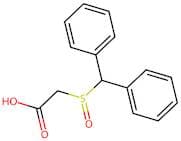
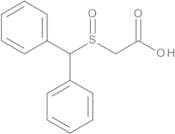
CAS:Formula:C15H14O3SColor and Shape:White To Off-White SolidMolecular weight:274.33[(RS)-(Diphenylmethyl)sulfinyl]acetic Acid
CAS:Controlled ProductFormula:C15H14O3SColor and Shape:NeatMolecular weight:274.33Modafinil Carboxylate
CAS:Controlled ProductFormula:C15H14O3SColor and Shape:NeatMolecular weight:274.332-BENZHYDRYLSULPHINYLACETIC ACID
CAS:Formula:C15H14O3SPurity:97.0%Color and Shape:No data available.Molecular weight:274.33Modafinil carboxylate
CAS:Modafinil is a drug that belongs to the class of wakefulness-promoting agents. It has been shown to have a long half-life and low toxicity in humans, which may be due to its effects on cytochrome P450 isoenzymes. Modafinil has been studied in clinical trials for its tolerability, with no significant side effects reported. The drug has also been shown to have anticonvulsant properties and can be used as an adjunctive treatment for patients with partial seizures. Modafinil binds to the GABA receptor in the brain and increases GABAergic neurotransmission. The compound's mechanism of action is not fully understood, but it is believed that it acts by inhibiting cyclic AMP degradation and increasing cAMP levels in the brain. This increase in cAMP levels may lead to increased protein kinase activity, decreased phosphorylation of glutamate receptors, increased release of dopamine, and decreased release of histamine from mast cells.Formula:C15H14O3SPurity:Min. 95%Color and Shape:PowderMolecular weight:274.34 g/mol





![[(RS)-(Diphenylmethyl)sulfinyl]acetic Acid](/_next/image/?url=https%3A%2Fstatic.cymitquimica.com%2Fproducts%2F86%2Fthumb%2FMM0540.01.jpg&w=3840&q=75)