![N-[(1,1-Dimethylethoxy)carbonyl]-D-serine](/_next/image/?url=https%3A%2Fstatic.cymitquimica.com%2Fcas-image%2Fthumb-webp%2F304714-n-11-dimethylethoxy-carbonyl-d-serine.webp&w=3840&q=75)
CAS 6368-20-3
:N-[(1,1-Dimethylethoxy)carbonyl]-D-serine
Description:
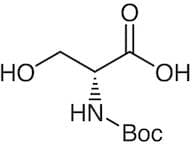
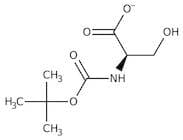
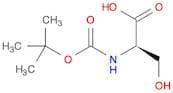
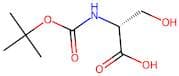
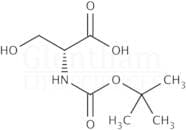
N-[(1,1-Dimethylethoxy)carbonyl]-D-serine, with the CAS number 6368-20-3, is an amino acid derivative characterized by the presence of a carbonyl group attached to the nitrogen of the amino group and a bulky 1,1-dimethylethoxy group. This structure imparts unique steric and electronic properties, making it useful in various chemical applications, particularly in peptide synthesis and as a building block in medicinal chemistry. The compound is typically a white to off-white solid, soluble in polar organic solvents, and exhibits stability under standard laboratory conditions. Its functional groups allow for potential reactivity in coupling reactions, making it valuable in the synthesis of more complex molecules. Additionally, the presence of the D-serine moiety suggests potential biological activity, as D-serine is known to play a role in neurotransmission. Overall, this compound exemplifies the intersection of organic chemistry and biochemistry, with applications in both synthetic methodologies and biological research.
Formula:C8H15NO5
InChI:InChI=1S/C8H15NO5/c1-8(2,3)14-7(13)9-5(4-10)6(11)12/h5,10H,4H2,1-3H3,(H,9,13)(H,11,12)/t5-/m1/s1
InChI key:InChIKey=FHOAKXBXYSJBGX-RXMQYKEDSA-N
SMILES:[C@H](NC(OC(C)(C)C)=O)(C(O)=O)CO
Synonyms:- (2R)-2-[(tert-butoxycarbonyl)amino]-3-hydroxypropanoate
- (2R)-2-[[(tert-Butoxy)carbonyl]amino]-3-hydroxypropanoic acid
- (2R)-3-Hydroxy-2-[(2-methylpropan-2-yl)oxycarbonylamino]propanoic acid
- (R)-2-(tert-Butoxycarbonylamino)-3-hydroxypropanoic acid
- (R)-tert-Butoxycarbonyl-<span class="text-smallcaps">D</span>-serine
- <span class="text-smallcaps">D</span>-Serine, N-[(1,1-dimethylethoxy)carbonyl]-
- BOC-<span class="text-smallcaps">D</span>-Serine
- BOC-D-Serine
- Boc-D-Ser-OH
- N-(tert-Butoxycarbonyl)-D-serine
- N-Boc-<span class="text-smallcaps">D</span>-serine
- N-[(1,1-Dimethylethoxy)carbonyl]-<span class="text-smallcaps">D</span>-serine
- N-tert-Butoxycarbonyl-<span class="text-smallcaps">D</span>-serine
- Serine, N-carboxy-, N-tert-butyl ester, <span class="text-smallcaps">D</span>-
- tert-(Butoxycarbonyl)-<span class="text-smallcaps">D</span>-serine
- D-Serine, N-[(1,1-dimethylethoxy)carbonyl]-
- Serine, N-carboxy-, N-tert-butyl ester, D-
- N-[(1,1-Dimethylethoxy)carbonyl]-D-serine
- See more synonyms
Sort by
Purity (%)
0
100
|
0
|
50
|
90
|
95
|
100
Found 9 products.
N-(tert-Butoxycarbonyl)-D-serine
CAS:Formula:C8H15NO5Purity:>98.0%(T)(HPLC)Color and Shape:White to Almost white powder to crystalMolecular weight:205.21N-Boc-D-serine, 98+%
CAS:This Thermo Scientific Chemicals brand product was originally part of the Alfa Aesar product portfolio. Some documentation and label information may refer to the legacy brand. The original Alfa Aesar product / item code or SKU reference has not changed as a part of the brand transition to Thermo SciFormula:C8H14NO5Purity:98+%Color and Shape:Crystals or powder or crystalline powder or lumps, WhiteMolecular weight:204.20boc-d-ser-oh
CAS:Formula:C8H15NO5Purity:95%Color and Shape:Solid, White powderMolecular weight:205.21Boc-D-serine
CAS:Controlled ProductApplications Boc-D-serine is D-serine (S270975) with amine protected from eletrophiles by tert-butyloxycarbonyl group in organic synthesis. Boc-D-serine can be used to synthesize acetamido-methoxypropionamides such as Desacetyl Desmethyl Lacosamide (D288325) which is a potent anticonvulsant.
References Letiran, A., et al.: J. Med. Chem., 45, 4762 (2002); Wadavrao, S., et al.: Synthesis, 45, 3383 (2013)Formula:C8H15NO5Color and Shape:NeatMolecular weight:205.21BOC-D-Ser-OH
CAS:BOC-D-Ser-OH is a synthetic amino acid with an acetylated serine side chain. It is used in the synthesis of glycosidic bonds. BOC-D-Ser-OH reacts with sodium hydrogen carbonate to form the sodium salt of D-serine, which can be used to produce glycoconjugates or as a model protein. The reaction yield is low and can be improved by adding acetyl groups to the substrate, such as galactose. Glycosidic bonds are formed by transfer reactions between nucleophilic hydroxyl groups on sugar molecules and electrophilic amino groups on proteins. The glycoconjugates produced by this reaction have been shown to have anticancer activity in animal models.Formula:C8H15NO5Purity:Min. 95%Molecular weight:205.21 g/mol