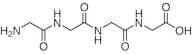
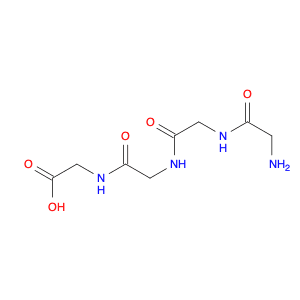
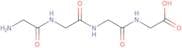
![N-[N-(N-glycylglycyl)glycyl]glycine](/_next/image/?url=https%3A%2Fstatic.cymitquimica.com%2Fcas-image%2Fthumb-webp%2F341105-tetraglycine.webp&w=3840&q=75)
CAS 637-84-3
:N-[N-(N-glycylglycyl)glycyl]glycine
- Glycyl-glycyl-glycyl-glycine
- Nsc 89178
- Tetraglycine
- N-(N-(N-Glycylglycyl)glycyl)glycine
- Glycyl-glycyl-glycyl-glycine, Tetraglycine, Triglycyl-glycine
- ([(([(Aminoacetyl)amino]acetyl)amino)acetyl]amino)acetic acid
- Glycine, N-[N-(N-glycylglycyl)glycyl]-
- Gly-Gly-Gly-Gly-OH
- GLY-GLY-GLY-GLY
- H-GLY-GLY-GLY-GLY-OH
- TRIGLYCYL-GLYCINE
Glycylglycylglycylglycine
CAS:Formula:C8H14N4O5Purity:>97.0%(T)(HPLC)Color and Shape:White to Almost white powder to crystalMolecular weight:246.222-(2-(2-(2-Aminoacetamido)Acetamido)Acetamido)Acetic Acid
CAS:2-(2-(2-(2-Aminoacetamido)Acetamido)Acetamido)Acetic AcidPurity:97%Molecular weight:246.22g/molGly-Gly-Gly-Gly-OH
CAS:Formula:C8H14N4O5Purity:97%Color and Shape:Solid, White powderMolecular weight:246.223H-Gly-Gly-Gly-Gly-OH
CAS:Tetraglycine.Formula:C8H14N4O5Purity:> 99%Color and Shape:White PowderMolecular weight:246.22Gly-Gly-Gly-Gly-OH
CAS:Gly-Gly-Gly-Gly-OH is a peptide that is used as an absorption enhancer. It has been shown to absorb ultraviolet light and convert it into visible light, which can increase the effectiveness of photosensitive drugs in the treatment of cancer. Gly-Gly-Gly-Gly-OH has also been shown to have protonation properties and can hydrogen bond with other molecules, including proteins. This molecule is activated by oxidation, which converts it from its amide form to its imine form. This activation process can be catalyzed by an oxidation catalyst such as manganese dioxide or nickel chloride. The imine form reacts with an electron donor such as hydrogen peroxide to produce an aromatic ring compound, which then undergoes intramolecular hydrogen transfer reactions to produce a second aromatic ring compound. These two compounds react with each other and release a water molecule (H2O) and energy in the form of heat or light. The frequency shift
Formula:C8H14N4O5Purity:Min. 95%Color and Shape:PowderMolecular weight:246.22 g/molRef: 3D-FG49308
Discontinued product