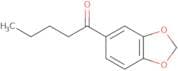
CAS 63740-98-7
:1-Pentanone,1-(1,3-benzodioxol-5-yl)-
Description:
1-Pentanone, 1-(1,3-benzodioxol-5-yl)-, also known by its CAS number 63740-98-7, is an organic compound characterized by its ketone functional group and a benzodioxole moiety. This compound features a five-carbon straight-chain alkyl group (pentanone) attached to a benzodioxole ring, which contributes to its unique chemical properties. The presence of the benzodioxole structure often imparts aromatic characteristics, influencing its reactivity and potential applications in various fields, including pharmaceuticals and organic synthesis. Typically, compounds like this exhibit moderate volatility and may have distinct solubility profiles in organic solvents. The compound's structure suggests potential for interactions such as hydrogen bonding and π-π stacking due to the aromatic nature of the benzodioxole. As with many organic compounds, safety data should be consulted for handling and usage, as the presence of both ketone and aromatic functionalities can affect toxicity and environmental impact. Overall, 1-Pentanone, 1-(1,3-benzodioxol-5-yl)- is of interest for its chemical properties and potential applications in synthetic chemistry.
Formula:C12H14O3
Synonyms:- 3,4-Methylenedioxyphenylbutyl ketone
Sort by
Purity (%)
0
100
|
0
|
50
|
90
|
95
|
100
Found 5 products.
1-(benzo[d][1,3]dioxol-5-yl)pentan-1-one
CAS:Formula:C12H14O3Purity:95%Color and Shape:SolidMolecular weight:206.23781-(Benzo[d][1,3]dioxol-5-yl)pentan-1-one
CAS:1-(Benzo[d][1,3]dioxol-5-yl)pentan-1-onePurity:95%Molecular weight:206.24g/mol3,4-Methylenedioxyphenyl Butyl Ketone
CAS:Controlled ProductApplications Intermediate in the preparation of nervous system stimulants.
References Vaidyanathaswamy, R., et al.: J. Agric. Food Chem., 25, 1401 (1977),Formula:C12H14O3Color and Shape:NeatMolecular weight:206.243,4-Methylenedioxyphenyl butyl ketone
CAS:Controlled Product3,4-Methylenedioxyphenyl butyl ketone (MBK) is a synthetic drug that is structurally related to the amphetamines. MBK has been shown to induce locomotor hyperactivity in mice and exhibits pharmacokinetic properties similar to other amphetamine-type stimulants. MBK has a high affinity for the glutamate transporter, leading to an increase in extracellular concentrations of this neurotransmitter. This may lead to neurotoxicity with repeated use. MBK also interacts with the glutamate receptor and affects glutamate homeostasis. The administration of ceftriaxone, a cephalosporin antibiotic, has been found to attenuate the effects of MBK on dopamine levels and motor activity in rats.Formula:C12H14O3Purity:Min. 95%Molecular weight:206.24 g/mol
![1-(benzo[d][1,3]dioxol-5-yl)pentan-1-one](/_next/image/?url=https%3A%2Fstatic.cymitquimica.com%2Fproducts%2FIN%2Fthumb%2FDA00ECK6.jpg&w=3840&q=75)

![1-(Benzo[d][1,3]dioxol-5-yl)pentan-1-one](/_next/image/?url=https%3A%2Fstatic.cymitquimica.com%2Fproducts%2F54%2Fthumb%2FOR1001895.jpg&w=3840&q=75)

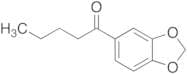

![1-(Benzo[d][1,3]dioxol-5-yl)pentan-1-one](/_next/image/?url=https%3A%2Fstatic.cymitquimica.com%2Fproducts%2F10%2Fthumb%2FF242874.jpg&w=3840&q=75)