CAS 643-03-8
:D-Altritol
Description:
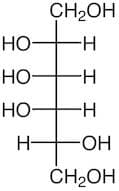
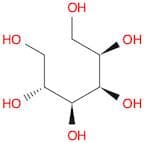
D-Altritol, also known as D-altritol or D-altriose, is a sugar alcohol derived from the aldose sugar D-altriose. It is a colorless, crystalline compound that is soluble in water and exhibits a sweet taste, making it of interest in food and pharmaceutical applications as a low-calorie sweetener. D-Altritol has a molecular formula of C6H14O6 and features multiple hydroxyl (-OH) groups, which contribute to its hydrophilicity and reactivity. The compound is typically stable under normal conditions but can undergo oxidation or fermentation under specific circumstances. D-Altritol is often used in the production of sugar-free products and has potential health benefits, such as a lower glycemic index compared to traditional sugars. Additionally, it is utilized in biochemical research and as a building block in organic synthesis. As with many sugar alcohols, excessive consumption may lead to gastrointestinal discomfort due to its laxative effect. Overall, D-Altritol is a versatile compound with applications in various industries, particularly in health-conscious food formulations.
Formula:C6H14O6
InChI:InChI=1/C6H14O6/c7-1-3(9)5(11)6(12)4(10)2-8/h3-12H,1-2H2/t3-,4-,5-,6+/m1/s1
InChI key:InChIKey=FBPFZTCFMRRESA-KAZBKCHUSA-N
SMILES:[C@@H]([C@@H]([C@@H](CO)O)O)([C@@H](CO)O)O
Synonyms:- <span class="text-smallcaps">D</span>-Altritol
- <span class="text-smallcaps">D</span>-Talitol
- Altritol, <span class="text-smallcaps">D</span>-
- D-Talitol
- D-altritol
- Altritol, D-
- Talitol
- D-TALITOL 98+%
- D-TALITOL USP/EP/BP
- D-Talitol-1-13C
- D-Altritol, Talitol
- See more synonyms
Sort by
Purity (%)
0
100
|
0
|
50
|
90
|
95
|
100
Found 4 products.
D-Talitol
CAS:Formula:C6H14O6Purity:>98.0%(HPLC)Color and Shape:White to Almost white powder to crystalMolecular weight:182.17D-Talitol
CAS:D-Talitol is a drug that is used to treat eye disorders and chronic pulmonary diseases. It belongs to the class of drugs called xylitol dehydrogenase inhibitors. D-Talitol inhibits the enzyme xylitol dehydrogenase, which converts xylitol into a different sugar called sorbitol. Sorbitol accumulates in certain parts of cells, such as the mitochondria, and can disrupt cellular processes by inhibiting oxidative phosphorylation and glycolysis. In addition, there are other effects of sorbitol accumulation that may lead to mitochondrial dysfunction, including inhibition of protein synthesis, induction of apoptosis (cell death), and inhibition of cell proliferation. D-Talitol has been shown to inhibit the growth of chronic kidney cells in culture by interfering with cellular metabolism in mitochondria. A kinetic study has also shown that D-Talitol inhibits b-raf activity at concentrations that are not cytotoxic. This suggests that D-Talitol may be useful forFormula:C6H14O6Purity:Min. 98 Area-%Color and Shape:White PowderMolecular weight:182.17 g/mol