CAS 64436-13-1
:Arsenobetaine
Description:
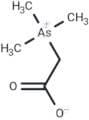
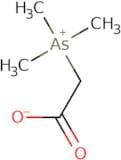
Arsenobetaine is an organoarsenic compound characterized by its unique structure, which includes an arsenic atom bonded to a beta-amino acid moiety. It is primarily found in marine organisms, particularly in certain fish and shellfish, where it serves as a metabolic product of arsenic. Arsenobetaine is notable for its low toxicity compared to other arsenic compounds, making it less harmful to humans and animals. It is water-soluble and stable under physiological conditions, which contributes to its prevalence in aquatic environments. The compound is often studied for its potential role in arsenic biotransformation and its implications for human health, particularly in relation to seafood consumption. Additionally, arsenobetaine is of interest in environmental chemistry due to its behavior in marine ecosystems and its interactions with other chemical species. Overall, its unique properties and biological significance make arsenobetaine a subject of ongoing research in both toxicology and environmental science.
Formula:C5H11AsO2
InChI:InChI=1S/C5H11AsO2/c1-6(2,3)4-5(7)8/h4H2,1-3H3
InChI key:InChIKey=SPTHHTGLGVZZRH-UHFFFAOYSA-N
SMILES:C([As+](C)(C)C)C([O-])=O
Synonyms:- arsonium, (carboxymethyl)trimethyl-, inner salt
- Arsonium, (carboxymethyl)trimethyl-, inner salt
- Trimethylarsonioacetate
- Arsenobetaine
Sort by
Purity (%)
0
100
|
0
|
50
|
90
|
95
|
100
Found 2 products.
Arsenobetaine
CAS:<p>Arsenobetaine, an organoarsenical and compatible solute, is discovered in numerous marine animals like lobsters and crabs, and terrestrial organisms such as earthworms and lichens. It protects against B. subtilis cell death caused by high osmolarity or extreme temperatures at 1 mM concentration. Notably, arsenobetaine exhibits non-toxicity to mice with an LD50 of 10 g/kg.</p>Formula:C5H11AsO2Color and Shape:SolidMolecular weight:178.06Arsenobetaine
CAS:<p>Arsenobetaine is an organic arsenic compound that is found in seafood. It has been detected in human urine, maternal blood, and human plasma. Arsenobetaine can be detected by fluorescence spectrometry and plasma mass spectrometry. The methyltransferase enzyme uses arsenobetaine as a substrate to methylate methionine residues of proteins. This process leads to the formation of dimethylarsinic acid (DMA) and trimethylarsine oxide (TMAO). Arsenobetaine may be carcinogenic to humans, although this has not been confirmed. People who have a high body mass index are more likely to have higher levels of arsenobetaine in their urine than those with lower body mass indexes.</p>Formula:C5H11AsO2Purity:Min. 95%Color and Shape:PowderMolecular weight:178.06 g/mol