CAS 64460-85-1
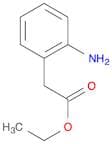
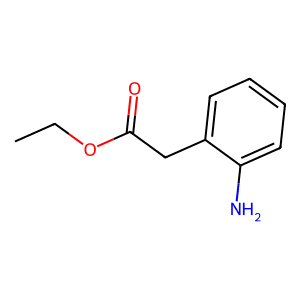
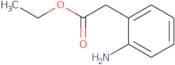
:ethyl (2-aminophenyl)acetate
Description:
Ethyl (2-aminophenyl)acetate, with the CAS number 64460-85-1, is an organic compound characterized by its ester functional group. It features an ethyl group attached to an acetate moiety, with a 2-aminophenyl group contributing to its structure. This compound typically appears as a colorless to pale yellow liquid and has a pleasant, fruity odor. It is soluble in organic solvents such as ethanol and ether, but its solubility in water is limited due to its hydrophobic characteristics. Ethyl (2-aminophenyl)acetate is often used in organic synthesis and may serve as an intermediate in the production of pharmaceuticals or agrochemicals. Its chemical properties include reactivity towards nucleophiles, making it useful in various chemical reactions, including acylation and amination processes. Safety data indicates that, like many organic compounds, it should be handled with care, as it may pose health risks if inhaled or ingested. Proper safety measures, including the use of personal protective equipment, are recommended when working with this substance.
Formula:C10H13NO2
InChI:InChI=1/C10H13NO2/c1-2-13-10(12)7-8-5-3-4-6-9(8)11/h3-6H,2,7,11H2,1H3
SMILES:CCOC(=O)Cc1ccccc1N
Synonyms:- (2-Amino-Phenyl)-Acetic Acid Ethyl Ester
- Benzeneacetic Acid, 2-Amino-, Ethyl Ester
- Ethyl (2-aminophenyl)acetate
Sort by
Purity (%)
0
100
|
0
|
50
|
90
|
95
|
100
Found 3 products.
Ethyl 2-aminophenylacetate
CAS:Ethyl 2-aminophenylacetatePurity:95%Color and Shape:SolidMolecular weight:179.22g/molethyl 2-(2-aminophenyl)acetate
CAS:Ethyl 2-(2-aminophenyl)acetate is a cytotoxic agent that binds to DNA and inhibits the synthesis of RNA and protein. It has been shown to inhibit the growth of murine leukemia cells in culture at concentrations between 0.3 and 3 mM, which are dependent on the concentration of benzyl substituents. Ethyl 2-(2-aminophenyl)acetate also exhibits dose-dependent cytotoxic activity against murine leukemia cells. The cytotoxic effects of this compound have been studied in vivo and in vitro using murine leukemia cells (WEHI-3).
Formula:C10H13NO2Purity:Min. 95%Molecular weight:179.2 g/mol