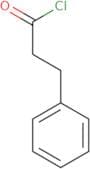
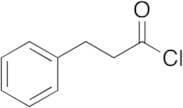
CAS 645-45-4
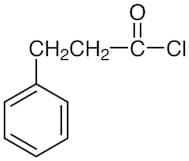
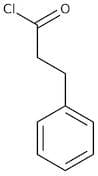
:Benzenepropanoyl chloride
Description:
Benzenepropanoyl chloride, also known as benzoyl chloride, is an aromatic acyl chloride characterized by its structure, which features a benzene ring attached to a propanoyl group. This compound is typically a colorless to pale yellow liquid with a pungent odor, indicative of its reactivity. It is known for being a potent acylating agent, commonly used in organic synthesis to introduce the benzoyl group into various substrates. Benzenepropanoyl chloride is soluble in organic solvents such as ether and chloroform but is not soluble in water due to its hydrophobic nature. It reacts vigorously with water, alcohols, and amines, releasing hydrochloric acid in the process, which necessitates careful handling and storage under inert conditions. The compound is utilized in the production of pharmaceuticals, agrochemicals, and dyes, highlighting its significance in industrial applications. Safety precautions are essential when working with this substance, as it can cause severe irritation to the skin, eyes, and respiratory tract.
Formula:C9H9ClO
InChI:InChI=1S/C9H9ClO/c10-9(11)7-6-8-4-2-1-3-5-8/h1-5H,6-7H2
InChI key:InChIKey=MFEILWXBDBCWKF-UHFFFAOYSA-N
SMILES:C(CC(Cl)=O)C1=CC=CC=C1
Synonyms:- 2-Ethoxybenzyl Chloride
- 3-Phenylpropanoic acid chloride
- 3-Phenylpropanoyl chloride
- 3-Phenylpropanoyl chlovide
- 3-Phenylpropionic acid chloride
- 3-Phenylpropionoyl chloride
- 3-Phenylpropionyl Chloride
- 3-Phenylpropionylchlorid
- Benzenepropanoyl chloride
- Chlorure de 3-phenylpropionyle
- Cloruro De 3-Fenilpropionilo
- Dihydrocinnamoyl chloride
- Hydrocinnamoylchlorid
- Hydrocinnamyl chloride
- Nsc 2854
- Phenylpropionyl Chloride
- Propionyl Chloride, 3-Phenyl-
- beta-Phenylpropanoyl chloride
- β-Phenylpropanoyl chloride
- β-Phenylpropionyl chloride
- See more synonyms
Sort by
Purity (%)
0
100
|
0
|
50
|
90
|
95
|
100
Found 7 products.
3-Phenylpropionyl Chloride
CAS:Formula:C9H9ClOPurity:>97.0%(GC)(T)Color and Shape:Colorless to Light yellow to Light orange clear liquidMolecular weight:168.623-Phenylpropionyl chloride, 98%
CAS:The 3-phenylpropionate (dihydrocinnamoyl) ester has been used as a protecting group in nucleoside synthesis. Used in the synthesis of 1-Phenyl-3-methyl-4-acyl-5- pyrazolones. N-(3-phenyl-n-propyl)-1-phenyl-2-aminopropane were prepared by acylation of the appropriate amine with 3-phenylpropionyl chloFormula:C9H9ClOPurity:98%Color and Shape:Clear colorless to yellow, LiquidMolecular weight:168.623-Phenylpropanoyl chloride
CAS:Formula:C9H9ClOPurity:98%Color and Shape:LiquidMolecular weight:168.6202Ref: IN-DA003JVT
5g20.00€10g25.00€1kg213.00€25g27.00€5kgTo inquire100g58.00€10kgTo inquire250g109.00€25kgTo inquire500g168.00€3-Phenylpropanoyl chloride
CAS:3-Phenylpropanoyl chlorideFormula:C9H9ClOPurity:98%Color and Shape: clear. brown to dark brown liquidMolecular weight:168.62016g/mol3-Phenylpropionyl chloride
CAS:3-Phenylpropionyl chloride is an acylating agent with antimicrobial properties. It is used as a precursor in the synthesis of many pharmaceuticals, such as amines and cyclohexane derivatives. 3-Phenylpropionyl chloride is a reactive compound that can undergo an acylation reaction with nucleophilic compounds to form an n-oxide. This reaction can be catalyzed by metal ions or bases. 3-Phenylpropionyl chloride has inhibitory properties against enzymes, such as aminoglycoside acetyltransferase and carbonyl reductase. It also has shown antitumor activity in cancer cells and metabolic disorders in the liver due to its ability to inhibit glycosidic bond formation.Formula:C9H9ClOPurity:Min. 95%Color and Shape:LiquidMolecular weight:168.62 g/mol3-Phenylpropanoyl chloride
CAS:Formula:C9H9ClOPurity:98%Color and Shape:LiquidMolecular weight:168.623-Phenylpropionyl Chloride
CAS:Controlled ProductApplications 3-Phenylpropionyl Chloride is a derivative of phenylpropionic acid used in the preparation of a wide range of pharmaceutical compounds such as antivirals and antitumor agents.
References Ermolova, G.I. et al.: Khim.-Farm. Zh., 24, 35 (1990); Bernier, J.L. et al.: J. Med. Chem., 28, 497 (1985); Jung, J.-C. et al.: Bioorg. Med. Chem. Lett., 14, 5527 (2004);Formula:C9H9ClOColor and Shape:NeatMolecular weight:168.62