


CAS 64513-70-8
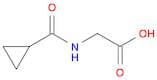
:N-(cyclopropylcarbonyl)glycine
Description:
N-(Cyclopropylcarbonyl)glycine, with the CAS number 64513-70-8, is an amino acid derivative characterized by the presence of a cyclopropylcarbonyl group attached to the amino acid glycine. This compound features a simple structure that includes an amino group (-NH2), a carboxylic acid group (-COOH), and a cyclopropyl ring, which contributes to its unique chemical properties. The cyclopropyl group can influence the compound's steric and electronic characteristics, potentially affecting its reactivity and interactions with biological systems. N-(Cyclopropylcarbonyl)glycine may exhibit interesting pharmacological properties, making it a subject of interest in medicinal chemistry. Its solubility, stability, and behavior in various solvents can vary based on the presence of the cyclopropyl moiety. Additionally, the compound's ability to participate in hydrogen bonding and its overall polarity can influence its biological activity and potential applications in drug design. Overall, N-(cyclopropylcarbonyl)glycine represents a fascinating example of how structural modifications can impact the properties of amino acid derivatives.
Formula:C6H9NO3
InChI:InChI=1/C6H9NO3/c8-5(9)3-7-6(10)4-1-2-4/h4H,1-3H2,(H,7,10)(H,8,9)
SMILES:C1CC1C(=NCC(=O)O)O
Synonyms:- [(Cyclopropylcarbonyl)Amino]Acetic Acid
Sort by
Purity (%)
0
100
|
0
|
50
|
90
|
95
|
100
Found 2 products.
2-[(Cyclopropylcarbonyl)amino]acetic acid
CAS:2-[(Cyclopropylcarbonyl)amino]acetic acid is a carboxylic acid that is used as an oral drug for the treatment of cardiac and renal diseases. It has been shown to be effective in the treatment of angiotensin-dependent hypertension and congestive heart failure. The therapeutic effects may be due to its ability to inhibit angiotensin-converting enzyme (ACE) and block the conversion of angiotensin I to angiotensin II, which causes vasoconstriction and increased blood pressure. 2-[(Cyclopropylcarbonyl)amino]acetic acid also inhibits phosphodiesterase, which may lead to improved cardiac function.Formula:C6H9NO3Purity:Min. 95%Molecular weight:143.14 g/mol

![2-[(Cyclopropylcarbonyl)amino]acetic acid](/_next/image/?url=https%3A%2Fstatic.cymitquimica.com%2Fproducts%2F3D%2Fthumb%2FPCA51370.jpg&w=3840&q=75)
