

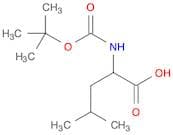
![Leucine, N-[(1,1-dimethylethoxy)carbonyl]-](/_next/image/?url=https%3A%2Fstatic.cymitquimica.com%2Fcas-image%2Fthumb-webp%2F309411-leucine-n-11-dimethylethoxy-carbonyl.webp&w=3840&q=75)
CAS 64727-35-1
:Leucine, N-[(1,1-dimethylethoxy)carbonyl]-
Description:
Leucine, N-[(1,1-dimethylethoxy)carbonyl]- is a derivative of the essential amino acid leucine, which plays a crucial role in protein synthesis and metabolic processes. This compound features a protective group, specifically a tert-butoxycarbonyl (Boc) group, which is commonly used in peptide synthesis to protect the amino group of amino acids during chemical reactions. The presence of the Boc group enhances the stability of the molecule and facilitates its use in various synthetic applications. The structure of this compound includes a branched alkyl chain, characteristic of leucine, contributing to its hydrophobic properties. As a result, it is likely to exhibit low solubility in polar solvents while being more soluble in organic solvents. The compound is typically utilized in biochemical research and pharmaceutical applications, particularly in the synthesis of peptides and other bioactive molecules. Its CAS number, 64727-35-1, allows for easy identification and reference in chemical databases and literature.
Formula:C11H21NO4
Synonyms:- Boc-DL-leucine
Sort by
Purity (%)
0
100
|
0
|
50
|
90
|
95
|
100
Found 4 products.
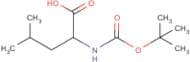
2-[(tert-Butoxycarbonyl)amino]-4-methylpentanoic acid
CAS:2-[(tert-Butoxycarbonyl)amino]-4-methylpentanoic acid is a carboxylic acid that has potent anti-HIV activity and is in the ccr5 antagonist class of compounds. It is orally bioavailable, which means it can be taken by mouth. This drug was discovered by scientists at Bristol-Myers Squibb and has been optimized for its anti-HIV activity. 2-[(tert-Butoxycarbonyl)amino]-4-methylpentanoic acid binds to the CCR5 co-receptor on CD4 cells, preventing HIV from entering these cells and infecting them. The drug blocks the binding site on the receptor so that HIV cannot attach to it. This prevents HIV from gaining entry into the cell and reproducing, thereby reducing viral load.Formula:C11H21NO4Purity:Min. 95%Molecular weight:231.29 g/mol



![2-[(tert-Butoxycarbonyl)amino]-4-methylpentanoic acid](/_next/image/?url=https%3A%2Fstatic.cymitquimica.com%2Fproducts%2F3D%2Fthumb%2FPCA72735.jpg&w=3840&q=75)
