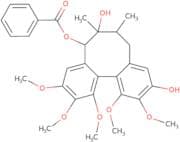
CAS 64917-83-5
:Schisantherin E
Description:
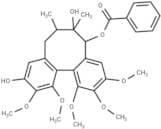
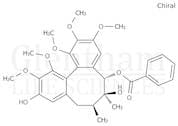
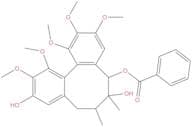
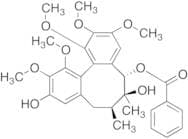
Schisantherin E is a chemical compound classified as a lignan, which is a type of polyphenolic compound commonly found in various plants. It is primarily extracted from the fruit of Schisandra chinensis, a plant known for its medicinal properties in traditional Chinese medicine. Schisantherin E exhibits a range of biological activities, including antioxidant, anti-inflammatory, and potential neuroprotective effects. Its structure features a complex arrangement of carbon rings, contributing to its stability and reactivity. The compound has garnered interest for its potential therapeutic applications, particularly in the fields of pharmacology and natural product chemistry. Additionally, Schisantherin E may play a role in modulating various biochemical pathways, making it a subject of research for its health benefits. As with many natural compounds, further studies are necessary to fully elucidate its mechanisms of action and potential uses in medicine.
Formula:C30H34O9
Synonyms:- Dibenzo[a,c]cyclooctene-3,7,8-triol,5,6,7,8-tetrahydro-1,2,10,11,12-pentamethoxy-6,7-dimethyl-, 8-benzoate,stereoisomer
- Schizantherin E
- Dibenzo[a,c]cyclooctene-3,7,8-triol,5,6,7,8-tetrahydro-1,2,10,11,12-pentamethoxy-6,7-dimethyl-, 8-benzoate,(6S,7S,8S)-
Sort by
Purity (%)
0
100
|
0
|
50
|
90
|
95
|
100
Found 6 products.
Schisantherin E
CAS:Schisantherin E is a natural lignan from Schisandra chinensis., which might be hepatoprotective, sedative, anticancer, and anti-inflammatory activities.Formula:C30H34O9Purity:99.91%Color and Shape:SolidMolecular weight:538.59Schisantherin E
CAS:Controlled ProductSchisantherin E is a biphenyl-containing natural product with various biological activities. It has been shown to have an inhibitory effect on human liver and human cancer cells. Schisantherin E also has a water molecule-binding property, which may be due to its multidrug resistance protein transporter activity. Schisantherin E is the extract of fructus schizandrae and has been used in traditional Chinese medicine for its anti-inflammatory and antioxidant properties. The main active components are schizandrin (1) and deoxyschizandrin (2), which can be converted into the respective aglycone by hydrolysis.Formula:C30H34O9Purity:Min. 95%Molecular weight:538.59 g/mol