CAS 64965-47-5
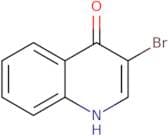
:3-bromoquinolin-4(1H)-one
Description:
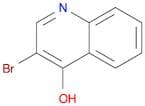
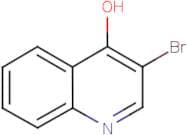
3-Bromoquinolin-4(1H)-one is a heterocyclic organic compound characterized by a quinoline structure with a bromine substituent at the 3-position and a ketone functional group at the 4-position. This compound typically appears as a solid and is known for its potential biological activity, making it of interest in medicinal chemistry and drug development. The presence of the bromine atom can influence its reactivity and interactions with biological targets. The quinoline core is recognized for its role in various pharmacological applications, including antimicrobial and anticancer properties. Additionally, 3-bromoquinolin-4(1H)-one may exhibit fluorescence, which can be useful in analytical applications. Its synthesis often involves bromination and subsequent functionalization of quinoline derivatives. As with many organic compounds, safety precautions should be taken when handling this substance, as it may pose health risks or environmental hazards. Overall, 3-bromoquinolin-4(1H)-one represents a valuable compound in the field of organic and medicinal chemistry.
Formula:C9H6BrNO
InChI:InChI=1/C9H6BrNO/c10-7-5-11-8-4-2-1-3-6(8)9(7)12/h1-5H,(H,11,12)
SMILES:c1ccc2c(c1)c(=O)c(c[nH]2)Br
Synonyms:- 3-Bromoquinolin-4-ol
- 4-Quinolinol, 3-Bromo-
Sort by
Purity (%)
0
100
|
0
|
50
|
90
|
95
|
100
Found 4 products.
3-Bromo-4-hydroxyquinoline
CAS:Formula:C9H6BrNOPurity:97%Color and Shape:SolidMolecular weight:224.05403-Bromoquinolin-4-ol
CAS:3-Bromoquinolin-4-ol is a pyrrole derivative with a hydroxy group on the 4 position. It is an intermediate in the synthesis of 3-bromo-5-hydroxypyridine, which can be used as a reagent for aminations, oxindole syntheses, and piperidide formation. The presence of substituents on the 2 position of the quinoline ring determines whether it is an isomeric or nonisomeric compound. Substituents on the 2 position also determine if it is a nucleus or not. Finally, a substitution at the 4 position determines whether it is 2-amino-4-hydroxypyridine or pyrrole derivatives.
Formula:C9H6BrNOPurity:Min. 95%Molecular weight:224.05 g/mol